
Automated Blinds
Automated Blinds for the
Windows You Cannot Reach,
Specified and Fitted Properly
Stairwell glazing, wide bays and bi-fold doors dressed with motorised blinds that move on one command, the motor, the control and the power route decided with the fabric, so nothing is improvised on fitting day.
Book a survey visit. We check reach, power options and grouping before you commit to anything.
Who You Are Dealing With
- Experience
- Transforming properties for over 15 years
- Consultation
- Free, in your own home
- Workroom
- Marsh Road, Pinner
- Measured & fitted
- Managed by us end to end
- Fabric viewing
- In your own room and light
- Registered company
- Adey Interiors Ltd · 11091485
- Guarantee & insurance
- Not Provided
What this service is, and who it is for
What automated blinds are
An automated blind is a made-to-measure blind with a motor in the roller tube or in the head of the Roman blind mechanism, operated by remote, wall switch, app or timer instead of a chain or cord.
The blind itself is still made for your window: the fabric, the width, the drop and the fixing method are specified in the ordinary way. Automation adds three further decisions - which motor, how it is powered, and how it is controlled - and those three decisions are where installations succeed or fail.
Blinds can be grouped so an entire elevation moves together on one command, or scheduled so a west-facing room closes down before the afternoon glare arrives without anybody being in the room.
Who it is for
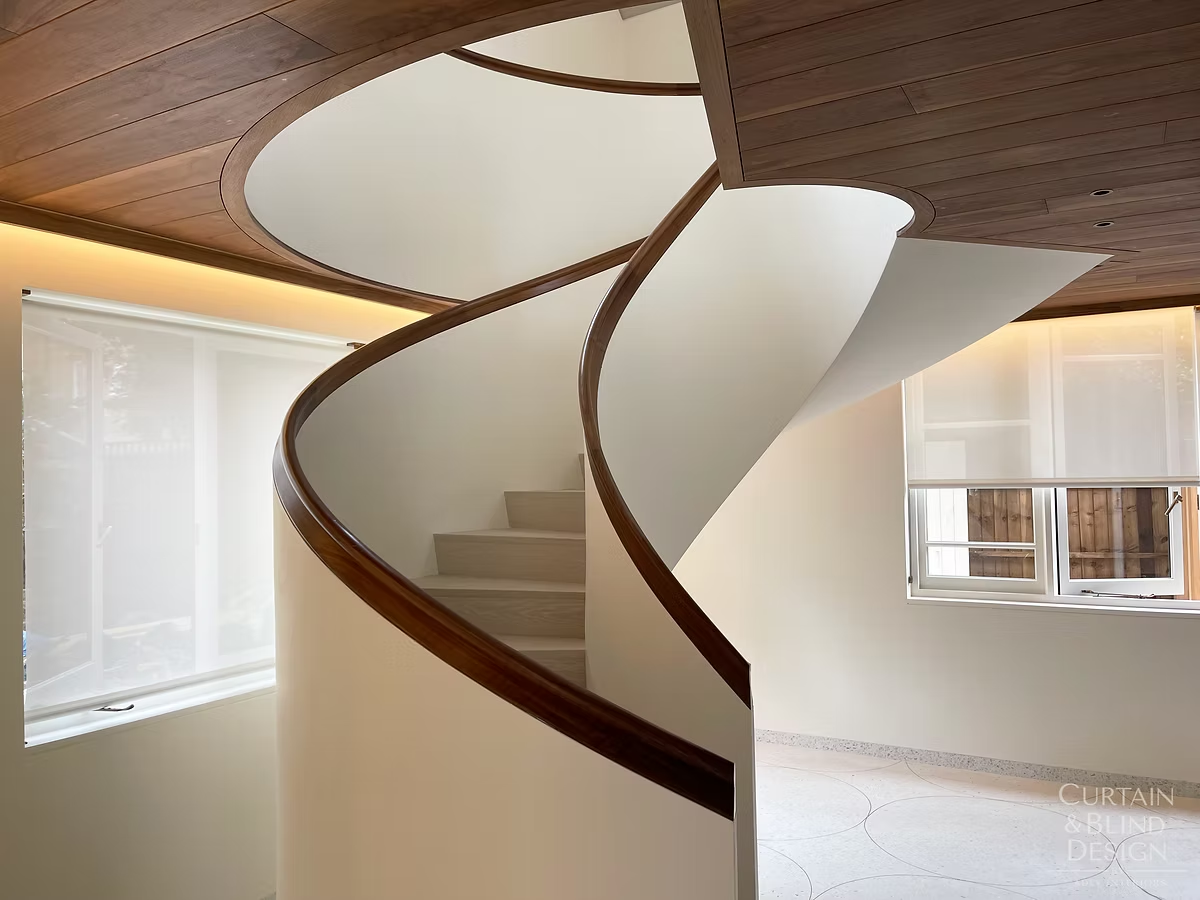
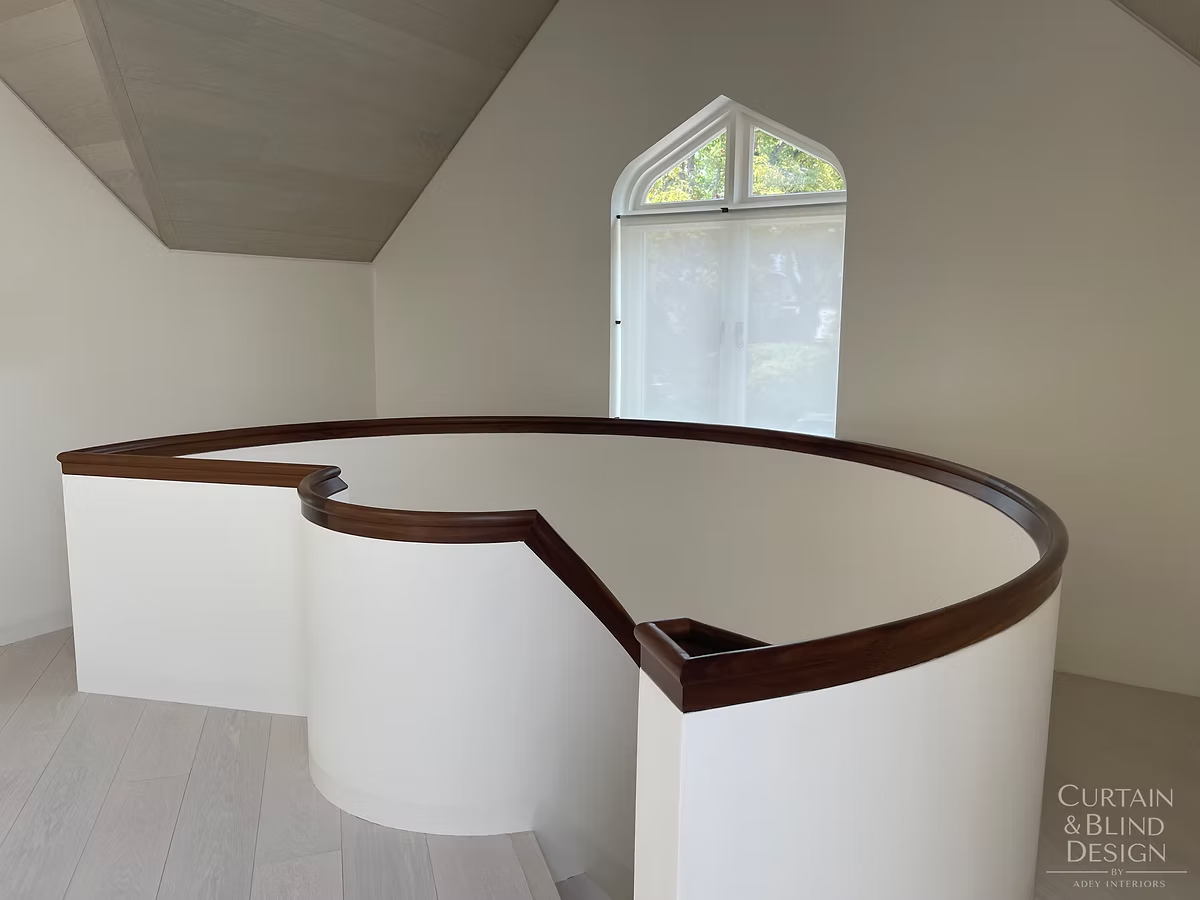
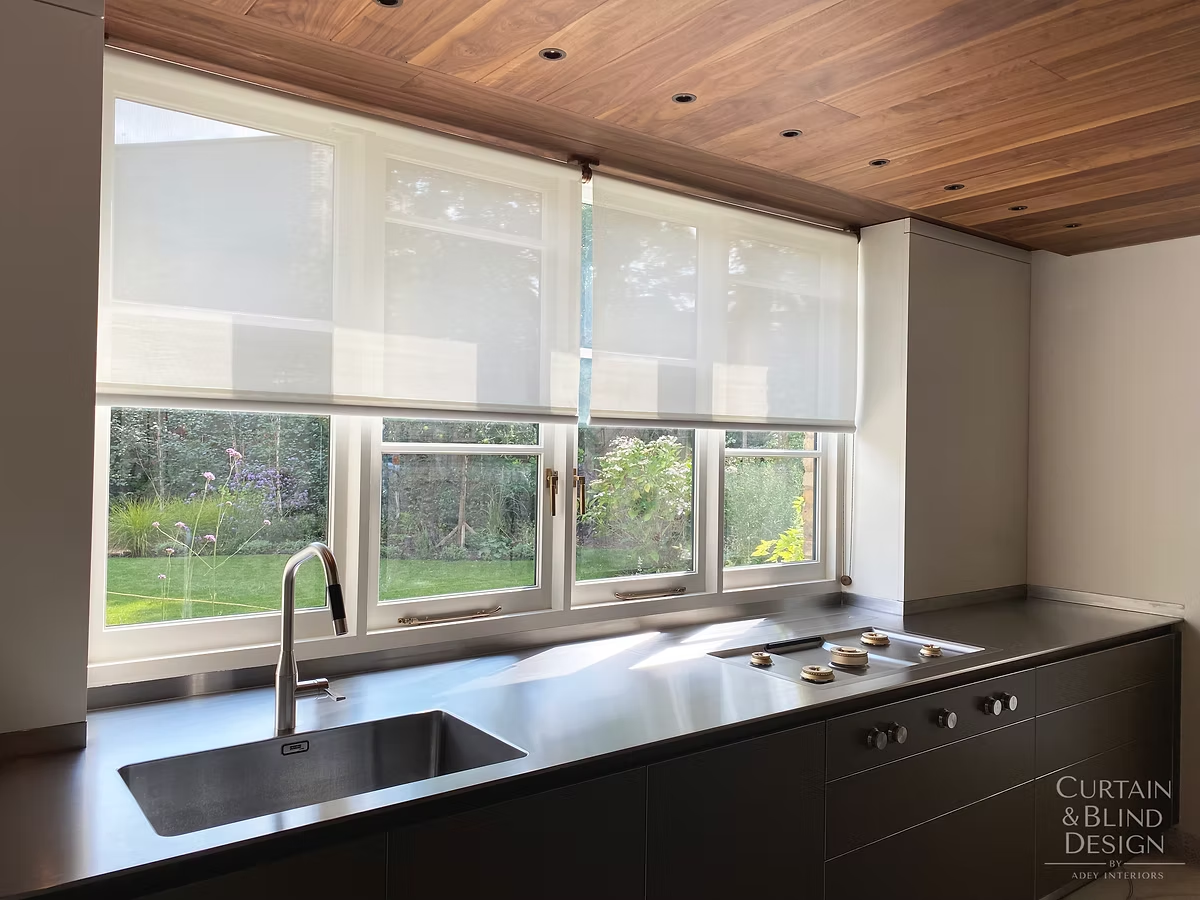
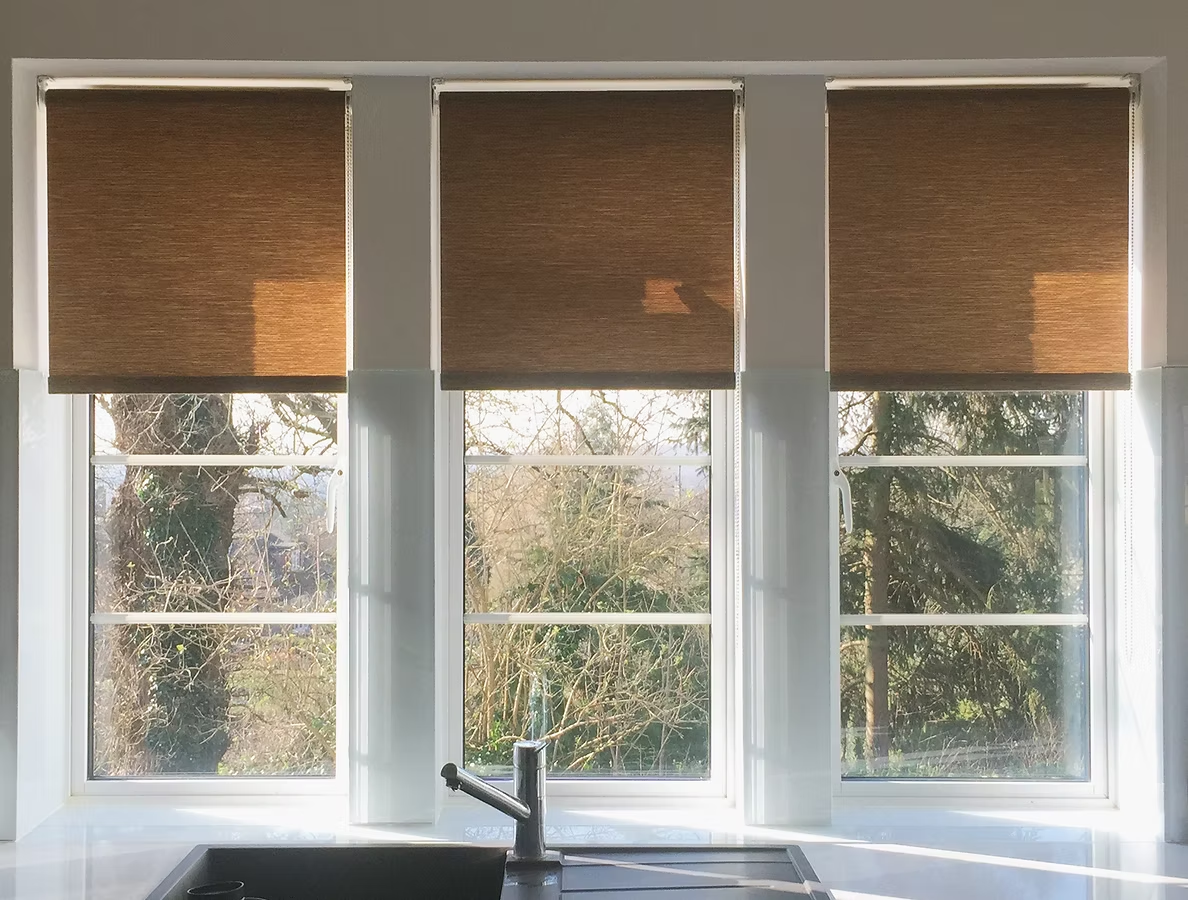
Homes with glazing that is genuinely out of reach: double-height stairwells, galleried landings, rooflights, windows above a fitted kitchen run, and tall sashes in period houses in Kensington, Chelsea and Belgravia where a ladder is the only alternative.
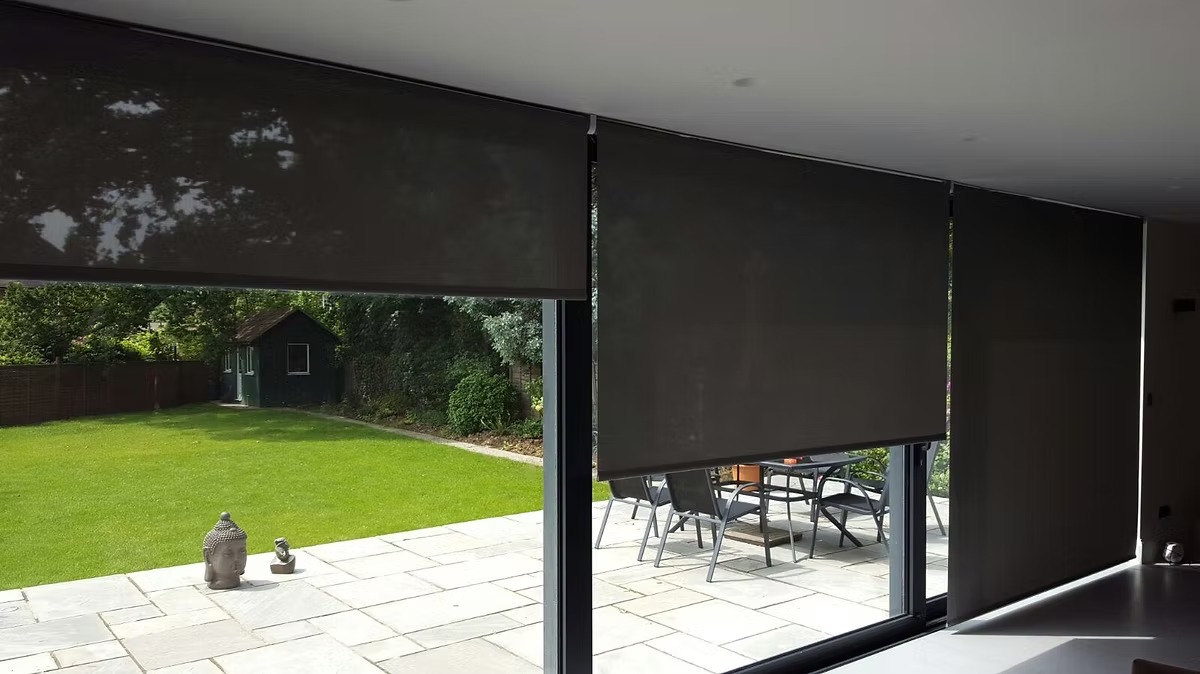
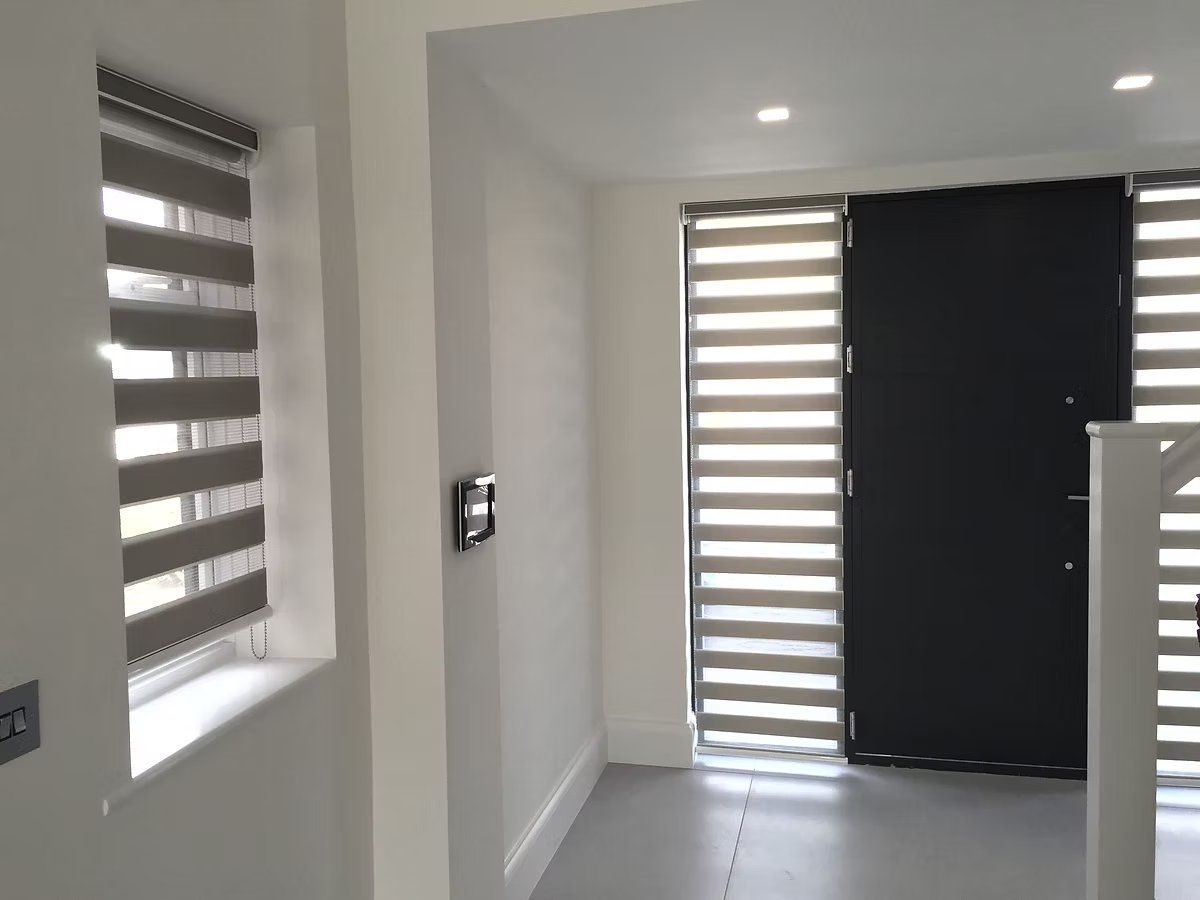
It also suits wide bays and long runs of bi-fold or sliding doors, where operating six or eight blinds by hand is enough friction that they simply stop being used.
Accessibility is a common driver as well. A wall switch or a phone replaces a cord that has to be reached, pulled and held, which matters for anyone with limited mobility, and it removes a looped cord from a room used by young children.
When it is needed
At the point glazing is designed or replaced, during a renovation while walls are open and a wired supply can still be run, or when an existing blind has become something nobody operates because reaching it is a job rather than a gesture.
It is also the right time when solar gain is driving a room: a study that becomes unusable at three in the afternoon, or a south-facing room where furniture and flooring are visibly fading.
Why professional specification matters
A motor has a torque rating and a duty cycle. Undersize it against the weight of the fabric and the drop, and the blind stalls, runs hot and shortens its own life. Oversize the tube diameter without checking the recess and the blind will not fit the reveal it was made for.
Power is the other half. Rechargeable motors need a route to get the battery down, which is a real problem at nine metres up a stairwell. A wired supply needs a socket or a fused connection in the right place, and that has to be agreed with your electrician before plaster goes back on.
We specify motor, control and power route alongside the fabric, and coordinate with your electrician where a wired supply is preferred to rechargeable, so the blind and the building are designed to the same plan.
Automated Blinds in our clients' homes
What it costs you to leave it
Power route decided too late
Once a stairwell is plastered and decorated, running a cable to the head of the glazing means chasing walls again. Deciding rechargeable against wired before the walls close is a fifteen-minute conversation; deciding it afterwards is a redecoration.
A motor working beyond its rating
A motor fighting a heavy interlined Roman blind on a long drop runs hot, becomes slow and eventually fails mid-travel, usually with the blind stuck across the glazing it was meant to control.
Unmanaged solar gain
Direct sun bleaches upholstery, timber floors and artwork, and it keeps working every clear afternoon whether anybody is home or not. An unautomated blind on unreachable glazing is a control you own but never use.
How the work runs
Step 1
Survey and reach assessment
We measure the openings, check the recess depth for the tube and mechanism, and confirm what is genuinely out of reach and what only feels awkward.
Step 2
Motor, control and power decision
Motor type and rating are matched to fabric weight and drop, the control method is chosen - remote, wall switch, app or timer - and the power route is fixed as rechargeable or wired.
Step 3
Fabric and light-control specification
Fabric is selected for the job the blind is doing: screen fabric for glare with a retained view, dim-out for living rooms, blackout for bedrooms and media rooms.
Step 4
Coordination with your electrician
Where a wired supply is chosen we confirm the position and type of the connection in writing so first-fix electrics land in the right place, before plaster and decoration.
Step 5
Installation and programming
Brackets and tubes are fitted, upper and lower travel limits are set, blinds are grouped into the channels or scenes you want, and any schedule is programmed with you.
Step 6
Testing, handover and verification
Every blind is run through its full travel, grouping and scenes are demonstrated, and you are shown charging or isolation, favourite-position setting and what to do if a motor loses its limits.
What you get from it
Windows you can actually use
Glazing three metres up becomes a one-press control, which means the light in that room gets managed daily instead of being ignored.
Whole elevations in one move
Grouping means a run of bi-fold blinds levels together, so the room reads as one dressed surface rather than eight separately adjusted ones.
Heat and glare handled on schedule
A timed close before the afternoon sun keeps a room usable and reduces the solar gain that an air-conditioning unit or a fan would otherwise fight.
Interiors protected
Consistent control limits the direct sun that fades sofas, rugs, artwork and timber floors, the damage that accumulates quietly over years.
Cords removed
No looped chain or cord hanging in a child's room or across a stair, and no reaching or pulling for anyone with limited mobility.
One plan, two trades
Because we set the power route with the specification and pass it to your electrician, the blind, the cable and the switch position all belong to the same drawing.
Materials, methods and variations
Blind types that can be automated
Roller blinds are the most straightforward: the motor sits inside the tube and the fabric rolls cleanly, which suits screen fabrics, blackout and large single spans. Roman blinds can be automated too, with the mechanism driven at the head, and give a softer, folded finish for sitting rooms and bedrooms.
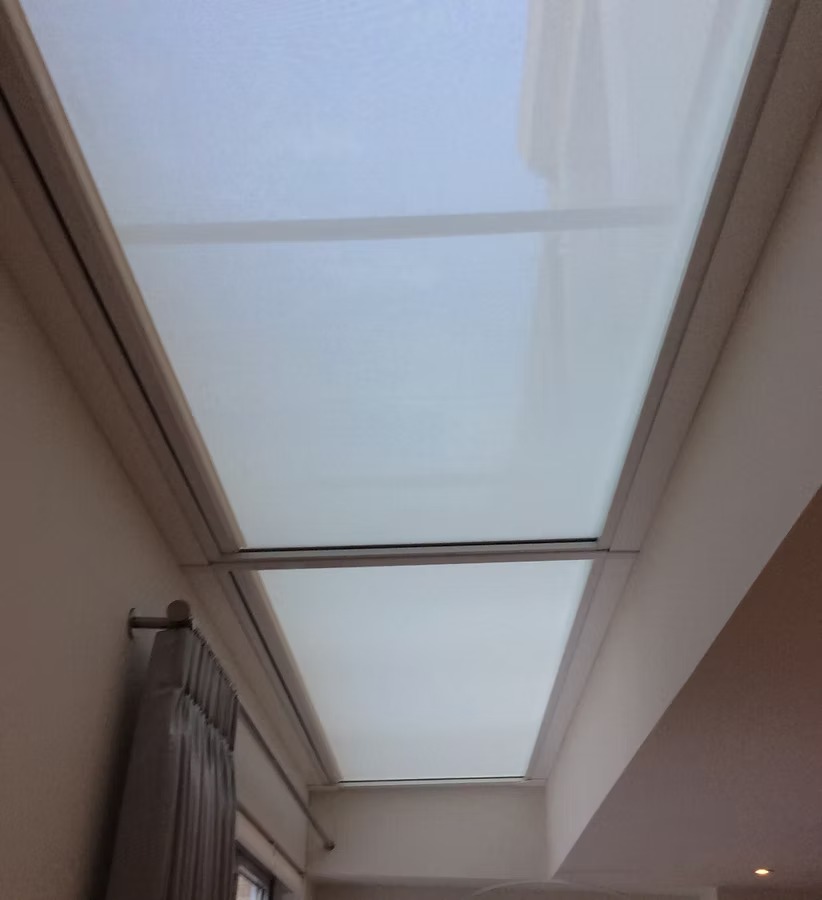
Vertical and panel arrangements suit very wide glazing, and rooflight or skylight blinds need a tensioned system so the fabric does not sag on a horizontal or raked run. Curtain tracks can also be motorised, which is often the better answer on tall sash windows where a blind alone would look thin.
Fabrics and light control
Solar screen fabrics are rated by openness factor. A tighter weave cuts more glare and heat but reduces the view through; a more open weave keeps the view and the daylight. On a stairwell or a study this is the single most useful decision.
Dim-out fabrics reduce light without removing it, which suits sitting rooms where a fully dark finish would feel dead in daytime. Blackout fabrics with side channels or a closer fit are specified for bedrooms, nurseries and media rooms.
Fabric weight feeds back into the motor choice, and on tall drops it also affects how straight the blind tracks, so weight, width and drop are settled together rather than in sequence.
Control, power and grouping
Handheld remotes suit one room and need no wiring. Wall-mounted switches give a fixed, obvious control that guests and cleaners can find. App and hub control adds scheduling, sun sensors and integration with wider home systems.
Rechargeable motors avoid cabling and are ideal where a blind can be reached once or twice a year for charging. Wired motors are the right answer for high or numerous blinds and for anything on a schedule, since there is no charge cycle to manage.
Grouping is set at programming: individual blinds, room groups, elevation groups and whole-house scenes. Setting a sensible group structure at the start avoids a remote with fifteen channels nobody remembers.
Residential and commercial differences
In houses the priority is quiet running, a soft finish and controls that anybody in the family can use. Fabric appearance carries as much weight as performance, and Roman blinds are often chosen over rollers for that reason.
In commercial and contract settings - offices, developments, show homes and hospitality - the priorities are duty cycle, repeatability, cleanable fabric and central scheduling. Specifications are written to be repeated identically across many openings, which overlaps with our contract curtains and voiles work.
Local installations, and living with automation
Double-height stairwells and galleried landings are common in the newer houses around Pinner, Northwood and Chalfont, and they are the single most frequent reason clients ask for motorisation. In Rickmansworth we see a lot of rear extensions with wide bi-fold runs, where the value of automation is grouping, one command levelling six blinds rather than adjusting each one.
Period properties in Kensington, Chelsea and Belgravia bring different constraints: tall sashes with shutter boxes eating reveal depth, lath-and-plaster walls that change the fixing, and a strong preference for keeping cabling invisible. In those homes rechargeable motors and Roman blinds are often specified together, so no cable route is needed and the finish stays soft rather than industrial.
Living with automated blinds is mostly about setting them up sensibly at handover. Favourite positions save a partly lowered setting you use daily; sensible group names keep a remote usable; and a schedule set for the two or three windows that genuinely suffer from afternoon sun is more useful than automating everything. Rechargeable motors are charged once or twice a year depending on use, and we show you how to check the battery level before it becomes a problem. Fabrics are cleaned by light vacuuming or wiping according to the fabric type, and we leave that guidance with you in writing.
Questions we are asked
What do automated blinds cost?
Cost depends on the blind type, the fabric, the drop, the motor rating and whether the supply is rechargeable or wired. Published price ranges: Not Provided. We survey the windows and give a written figure per opening before anything is ordered.
How long does an automated blind installation take?
Lead times depend on motor and fabric availability. Stated turnaround times: Not Provided. Installation itself is usually a single visit per room once any electrical supply is already in place.
Rechargeable or wired, which should I choose?
Choose rechargeable where the blind can be reached easily for charging and there is no cable route. Choose wired for high glazing, for large numbers of blinds and for anything running on a schedule, so there is no charging cycle to manage.
Do I need an electrician?
Only for wired motors. We confirm the position and type of connection required in writing and coordinate with your electrician so the supply is there before plaster and decoration go back.
Can automated blinds be added to a house that is already decorated?
Yes: rechargeable motors are designed for exactly that situation, because they need no cable run. If you want wired motors after decoration, we will be straight with you about the chasing and making good involved.
Will they work with my smart home system?
Many motor ranges offer hub or app control that integrates with wider home systems. Which specific platforms are supported depends on the motor range chosen, and we confirm that in writing at specification rather than promising compatibility in advance.
How long do the motors last?
Motor life depends on duty cycle and correct specification rather than a fixed number of years, so we will not quote a lifespan. What matters most is that the motor is rated above the actual weight and drop it carries, which is set at survey.
Is there a guarantee on the motors and the fitting?
Guarantee and warranty terms: Not Provided. Tell us what you need confirmed and it will be set out in writing with your quotation.
What happens if a blind loses its limits or stops responding?
Limits can be reset without removing the blind, and we show you the reset procedure at handover. Call 07961 112309 if a blind stops mid-travel and we will talk it through or come out.
Do you fit automated blinds in central London as well as Pinner?
Yes. We work from Marsh Road in Pinner across Northwood, Rickmansworth and Chalfont, and in Kensington, Chelsea, Belgravia, Hampstead and Primrose Hill.
Where this work takes us
Next Step
Have the awkward windows surveyed before the walls close up
Tell us which glazing is out of reach and whether the room is being renovated. We will visit, confirm the motor, control and power route, and put the specification in writing.
Book a survey visit. We check reach, power options and grouping before you commit to anything.