
Roman Blinds
Roman Blinds, Made to Measure
with Folds Set Out to the
Height of Your Window
A tailored, evenly stacked blind for windows where full curtains would crowd the space: fold depth calculated to the drop, fabric chosen for the light you want, fitted inside or outside the recess to suit the room.
Book a measure and fabric visit. Samples come to you and the measurements are taken at the same time.
Who You Are Dealing With
- Experience
- Transforming properties for over 15 years
- Consultation
- Free, in your own home
- Workroom
- Marsh Road, Pinner
- Measured & fitted
- Managed by us end to end
- Fabric viewing
- In your own room and light
- Registered company
- Adey Interiors Ltd · 11091485
- Guarantee & insurance
- Not Provided
What this service is, and who it is for
What a Roman blind is
A Roman blind is a flat panel of fabric that draws up into horizontal folds, held by rods sewn into the back and cords or a chain-driven mechanism at the head. Lowered, it reads as one clean panel; raised, it stacks into an even set of folds at the top of the window.
The fold depth is set out to the height of the blind, so the stack reads evenly rather than leaving one shallow fold at the bottom or a stack so deep it eats the glass. That calculation, done per window, is what separates a made-to-measure Roman blind from an off-the-shelf one.
They are available interlined for weight and light control, or unlined where you want daylight to soften through the fabric, and can be fitted inside the recess or outside it on the face of the wall.
Who it is for
Rooms where full curtains would be too much: kitchens, bathrooms, cloakrooms, studies, small bedrooms, landings, and windows next to a run of units or a radiator where a curtain has nowhere to stack.
Also for anybody who wants a tailored, architectural finish: Roman blinds suit period sashes in Kensington and Chelsea as much as they suit a modern extension, because the fabric does the work rather than the hardware.
They also work as a layer: an unlined Roman blind behind curtains gives daytime privacy while the curtains handle night-time cover and warmth.
When it is needed
During a kitchen or bathroom fit-out, when a room has been decorated and the window is the last bare surface, when privacy from a neighbouring house or a street is the immediate issue, or when a bedroom needs to go properly dark.
Also when an existing blind is not stacking evenly, has faded on the exposed edge, or was cut for the recess and now sits too tight or too loose since the reveal was replastered.
Why measuring and setting out matters
A Roman blind is unforgiving about width. Inside a recess it needs clearance to raise and lower without catching, but too much clearance leaves a visible light gap down each side. Recesses are rarely square, so the width is measured at several heights and the narrowest figure governs.
The stack height matters too. Every blind loses some of the top of the window to the stack when raised, and that depth changes with fabric weight and interlining. Setting the blind outside the recess, higher than the opening, is often the fix, but that is a decision to make before making, not after.
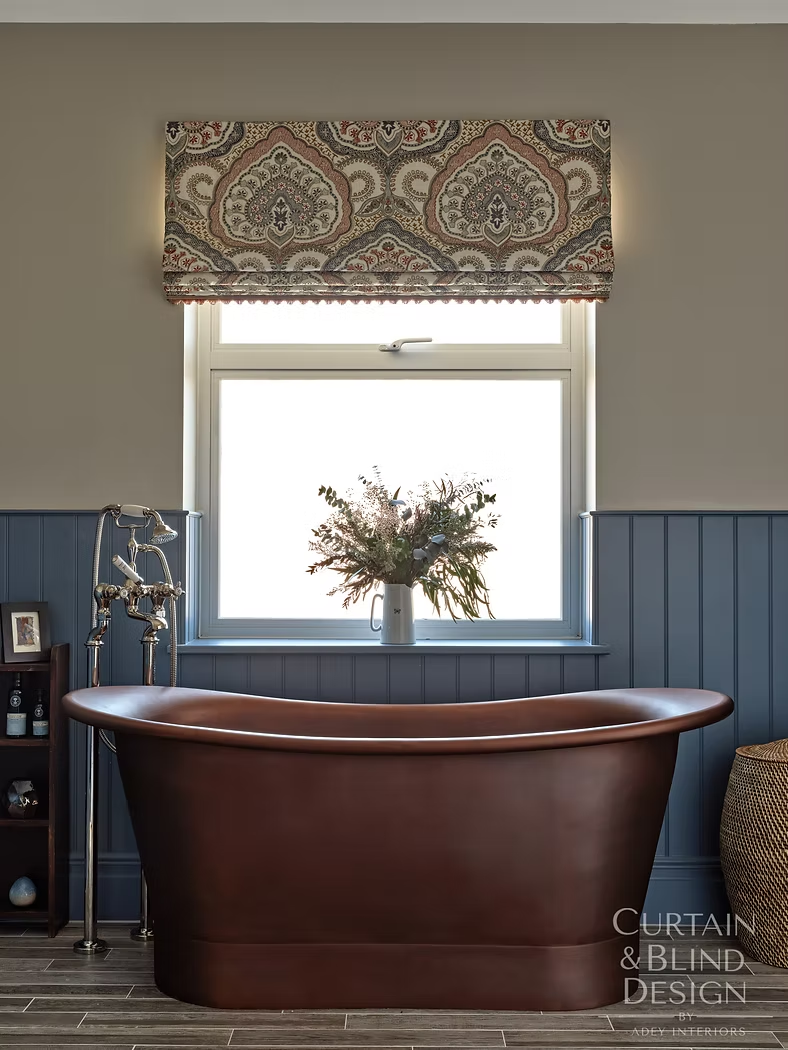
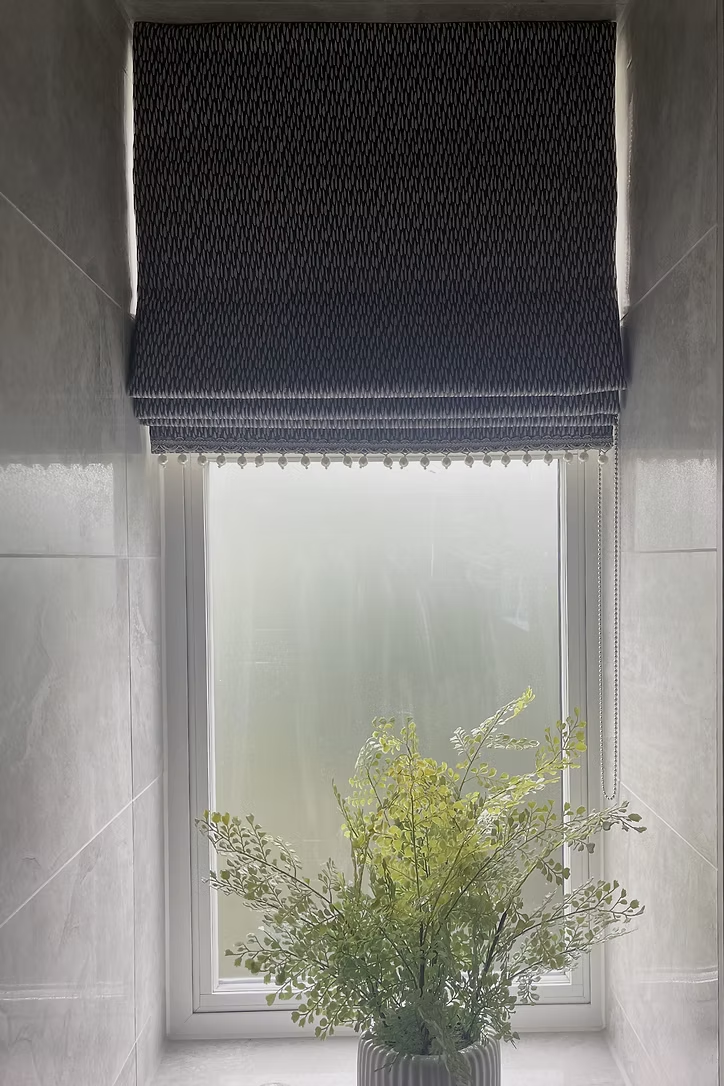
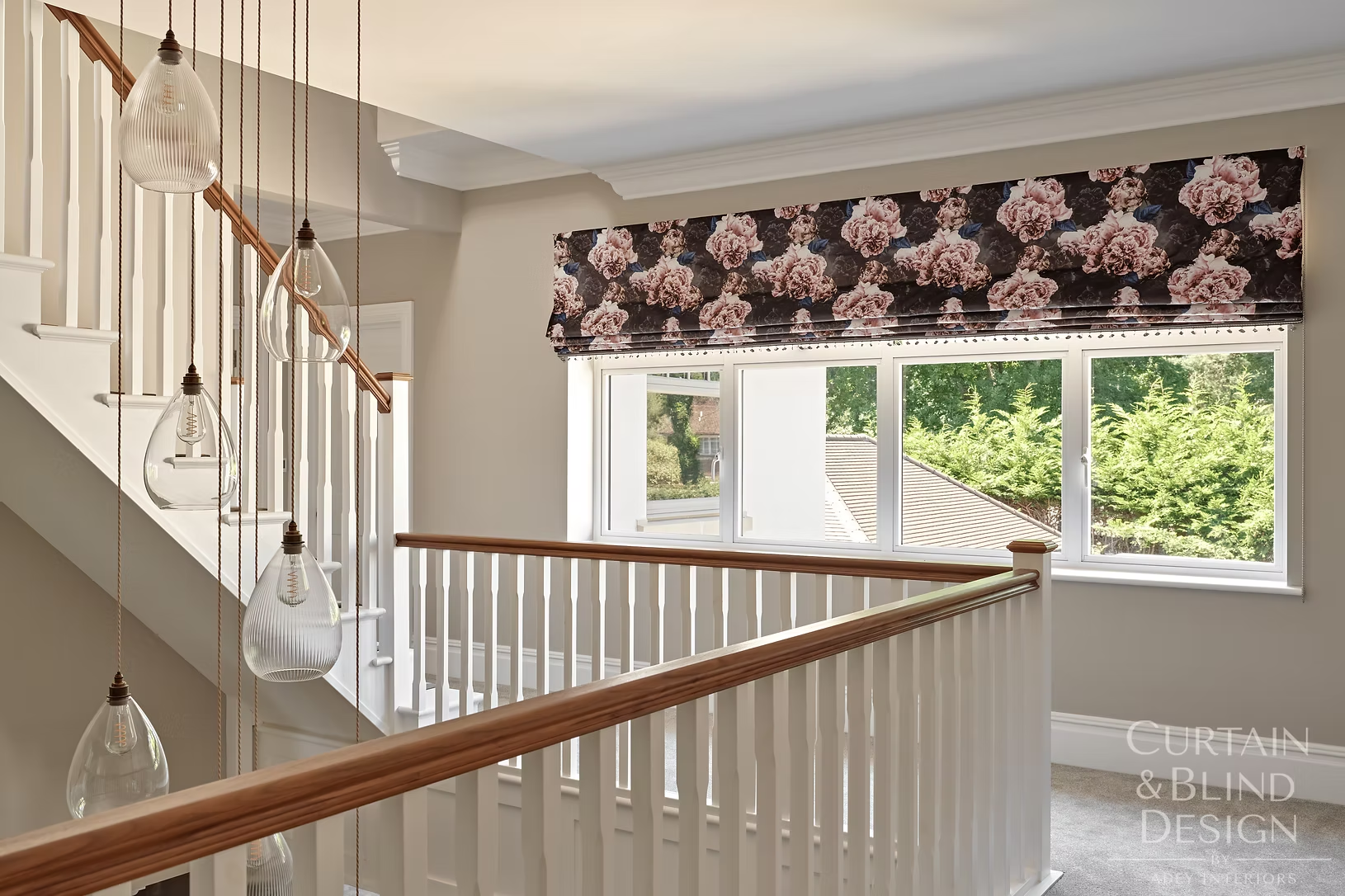
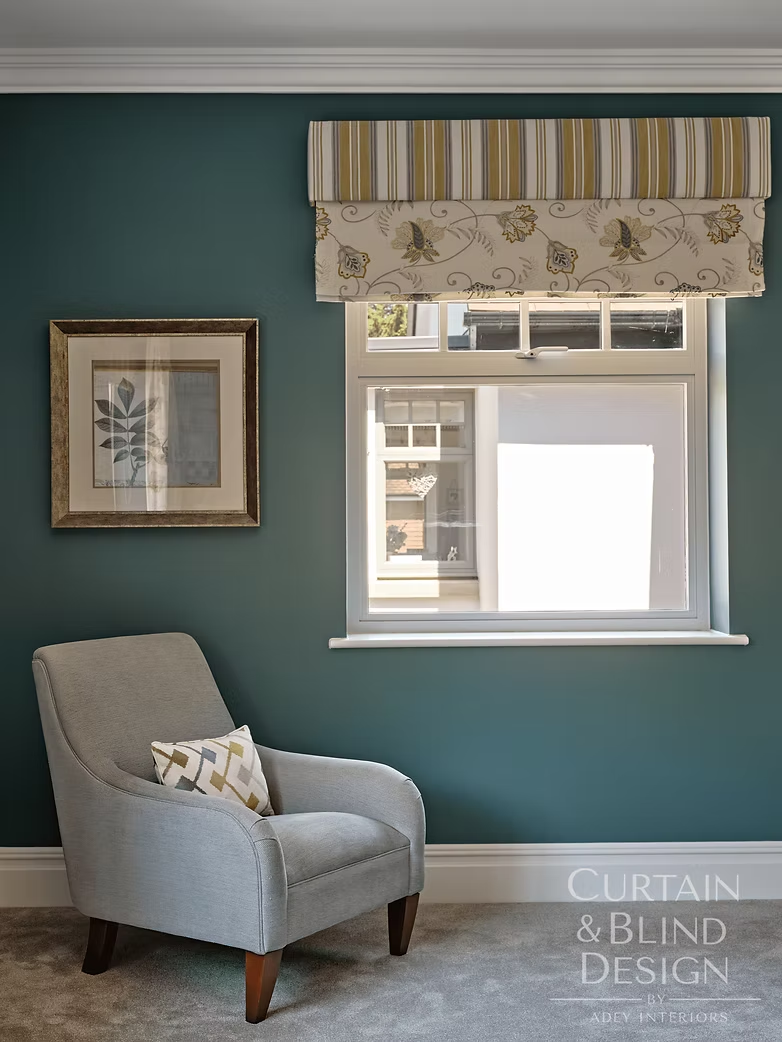
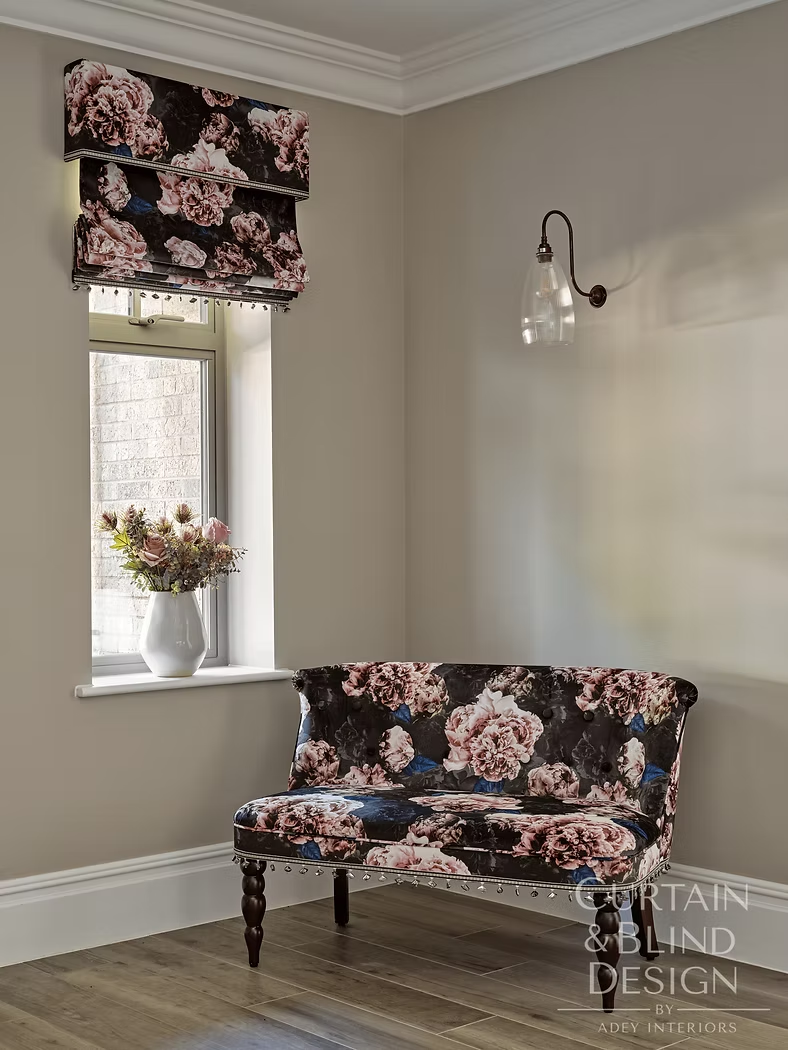
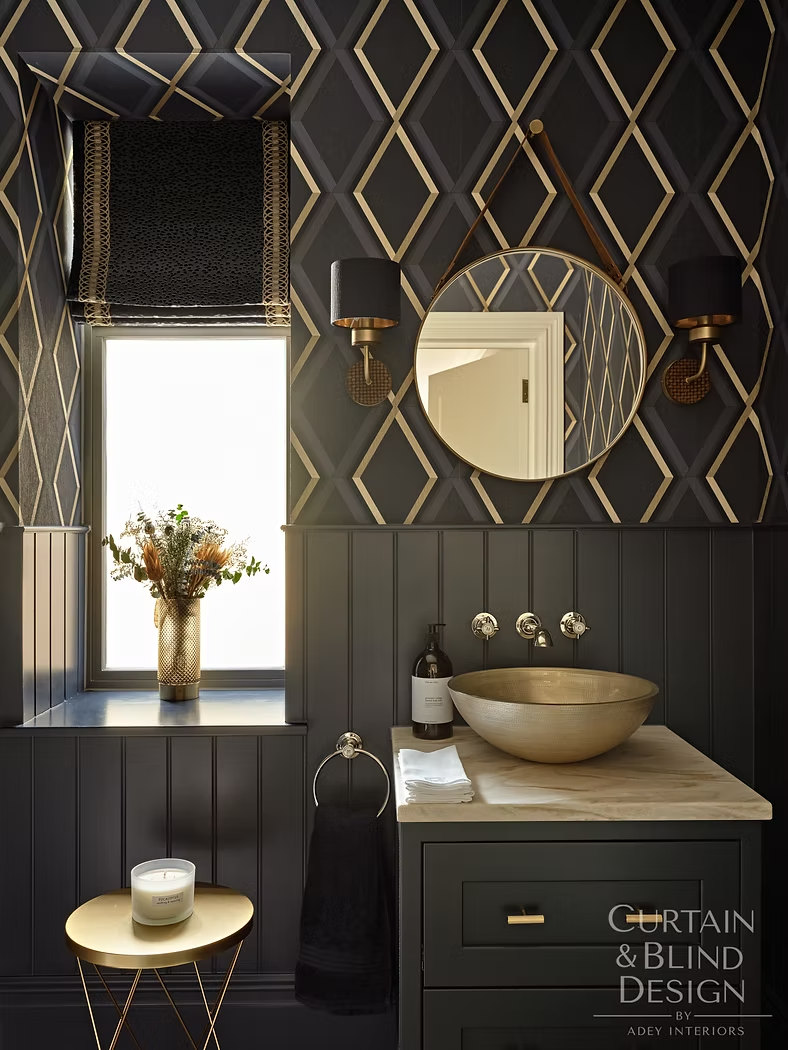
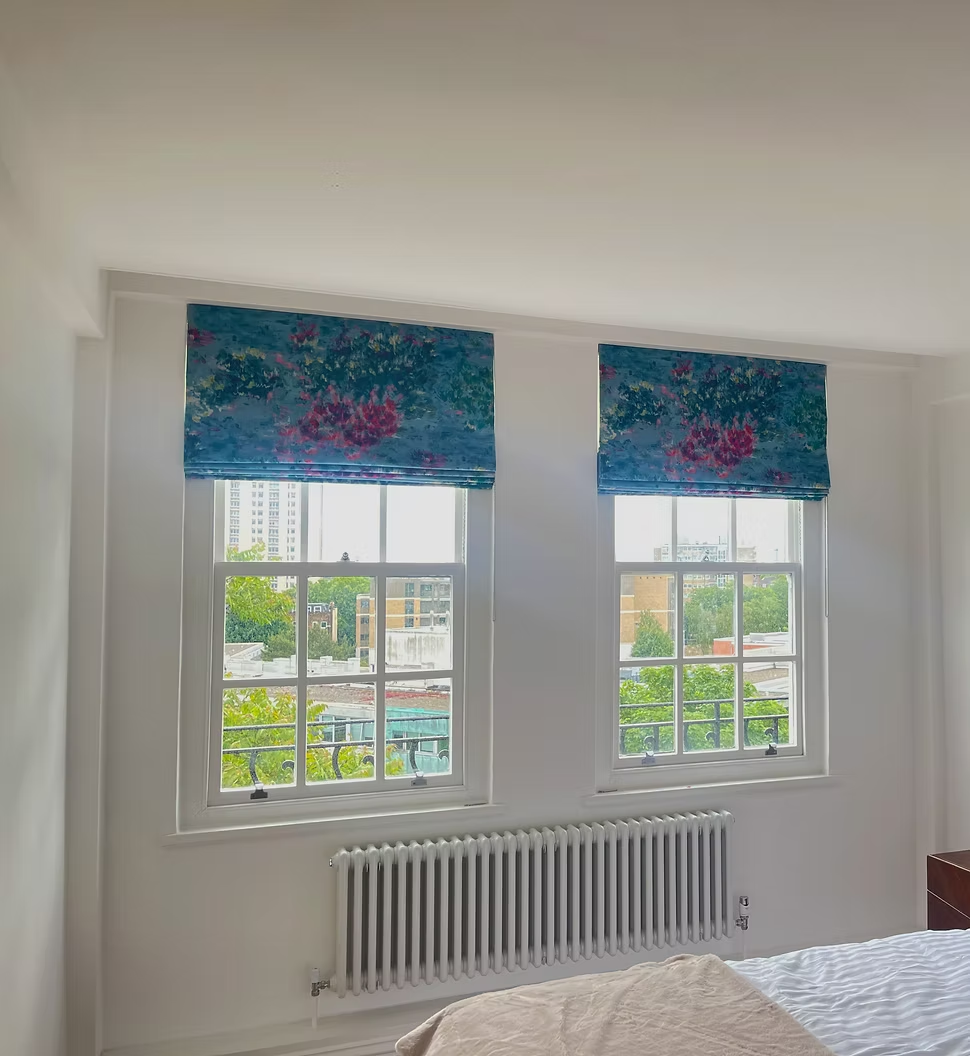
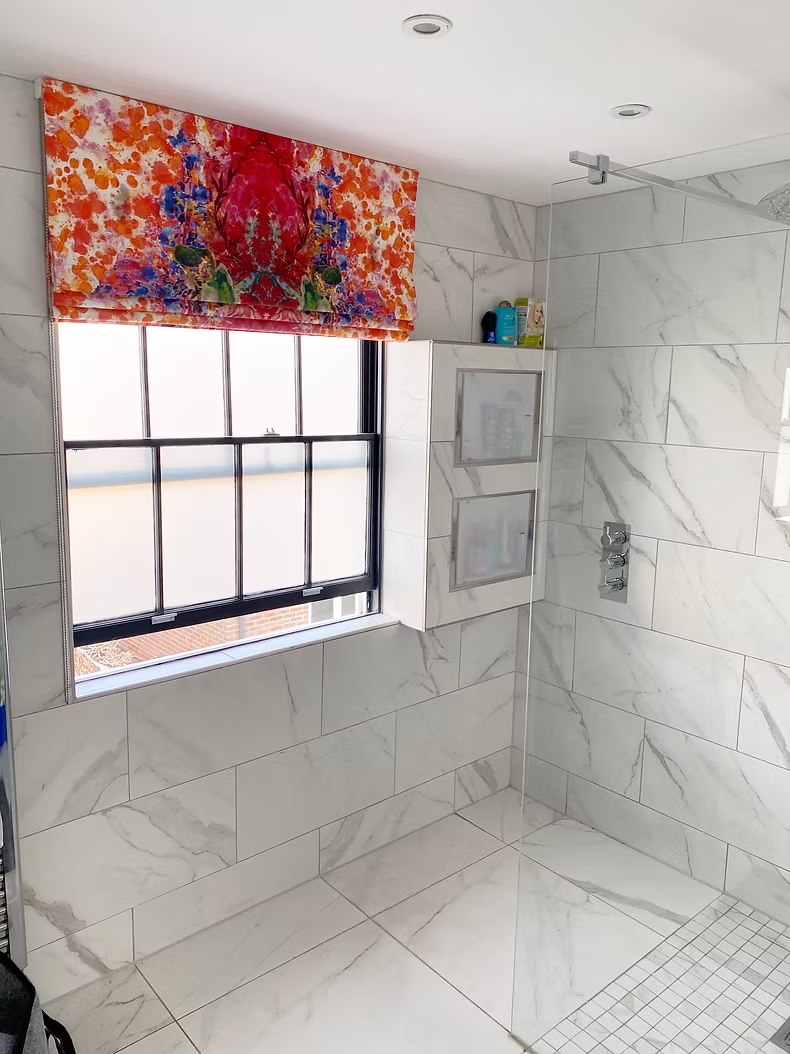
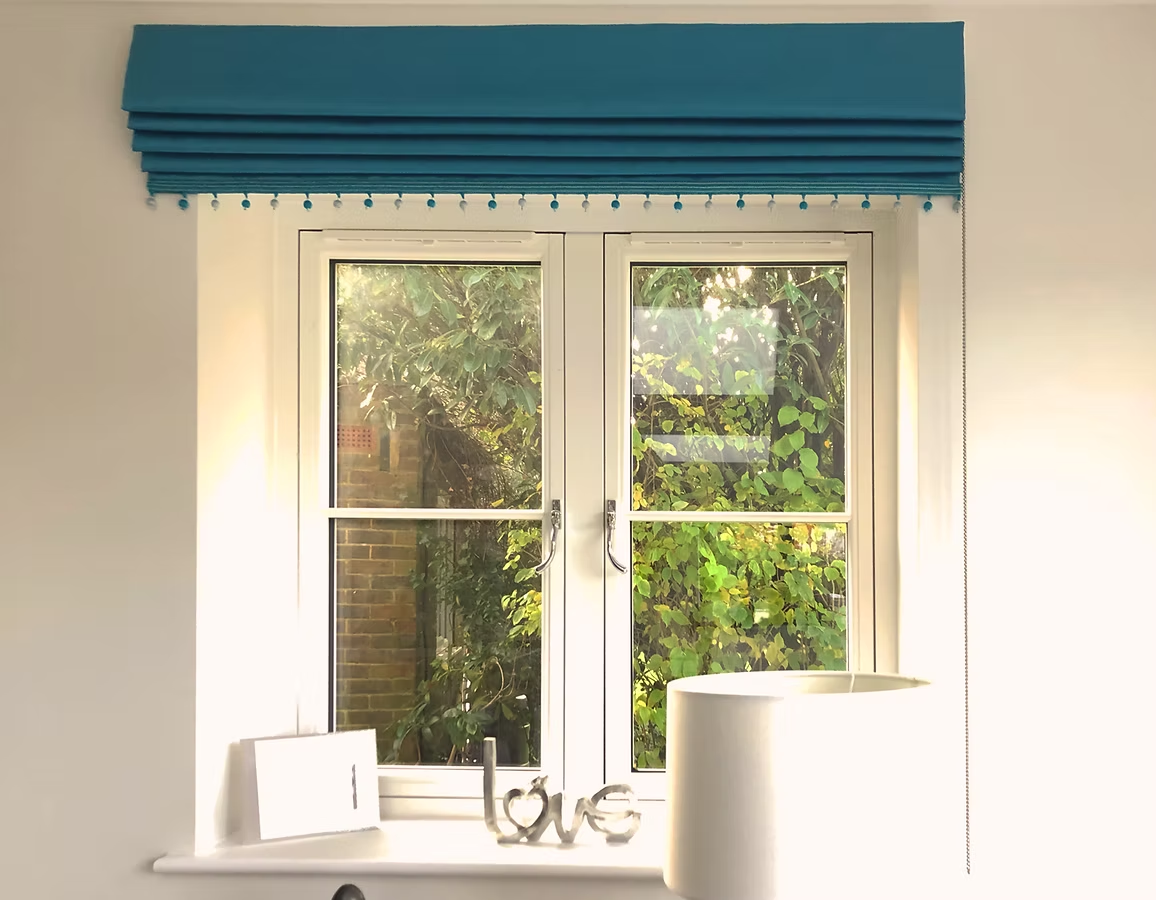
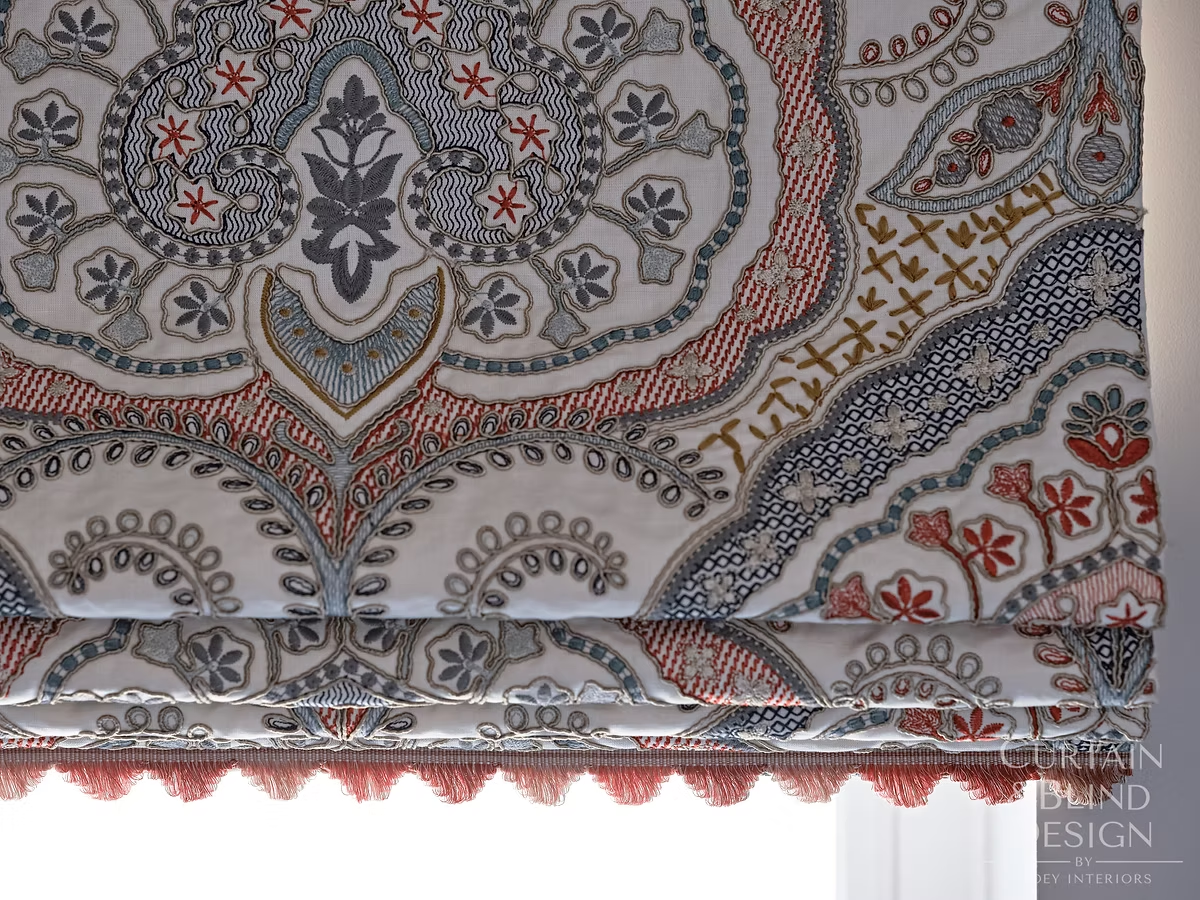
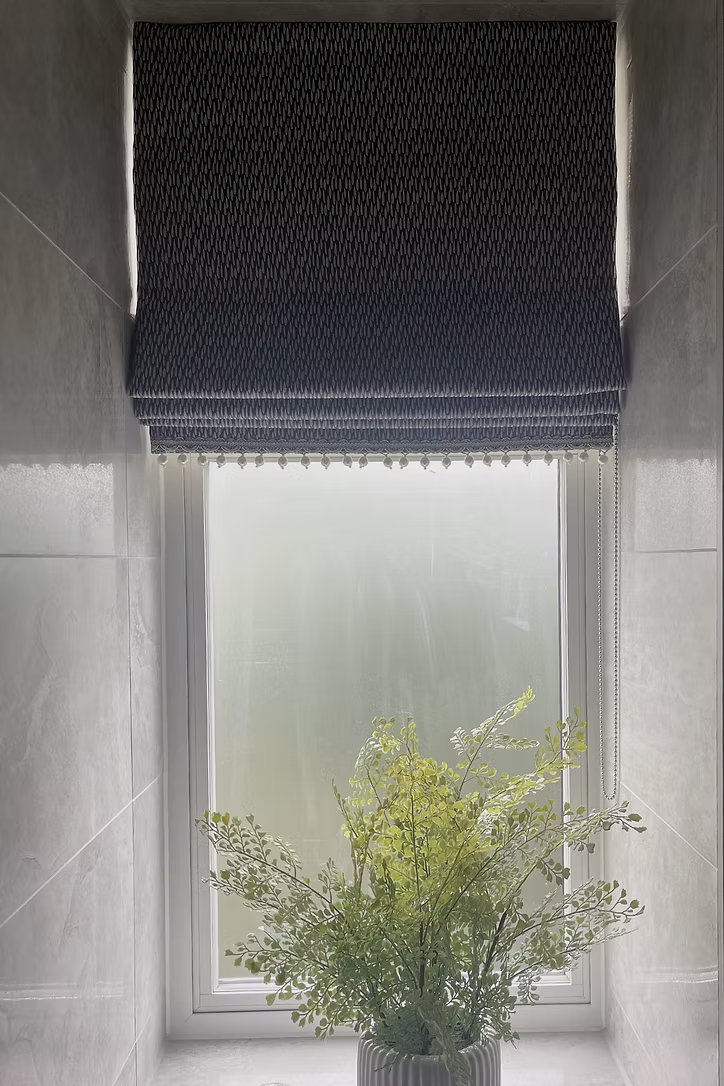
Roman Blinds in our clients' homes
What it costs you to leave it
A blind cut to the wrong reveal figure
Recesses go in and out by several millimetres. Measure at one height only and the blind either catches on the plaster as it raises or leaves a light gap you see every morning. The fabric is already cut by then.
Losing the top of the window permanently
An interlined blind stacks deeper than an unlined one. If the stack was not allowed for, the raised blind sits across the glazing and the room loses daylight it should have kept.
Fabric failing in the wrong room
An unsuitable fabric in a steamy bathroom or above a hob marks, sags and stains. Choosing for the room's conditions rather than for the swatch board avoids replacing it within a couple of years.
How the work runs
Step 1
Survey and recess check
We measure the width at several heights, check the drop, the reveal depth and the squareness, and confirm what the blind has to clear: handles, tiles, taps, worktops.
Step 2
Inside or outside the recess
We agree the fitting position, taking account of light gaps, stack height and whether the window looks better contained in the reveal or dressed above it.
Step 3
Fabric and lining choice at home
Samples are viewed in the room's own light and against the surrounding finishes, and lining is fixed as unlined, standard, interlined, dim-out or blackout to suit the room's job.
Step 4
Setting out the folds
Fold depth and rod positions are calculated to the finished drop so the stack is even, then the panel is cut with the pattern centred and matched across any joins.
Step 5
Making and mechanism
Rod pockets, lining and interlining are made in, the blind is mounted on its headrail, and the operating system - chain, cord or motor - is fitted and set to a safe, correct length.
Step 6
Fitting, testing and handover
The blind is fitted level, raised and lowered through its full travel, the folds are dressed so they set into shape, and care and cleaning guidance is given for the fabric.
What you get from it
Even folds, every time it is raised
Because fold depth is calculated to your drop, the stack reads as a set of equal folds rather than one odd shallow fold at the bottom.
Space kept in tight rooms
A Roman blind holds a tailored finish without the stack-back a pair of curtains needs, which is what makes it work beside units, radiators and narrow reveals.
Light dialled to the room
Unlined for softened daylight, dim-out for living spaces, blackout for bedrooms, the same blind shape doing three different jobs.
Insulation where it is needed
An interlined Roman blind adds a real layer at the glass, which is noticeable at an older single-glazed window in winter.
Fabric that survives its room
Specifying for steam, splash and sun means a bathroom or kitchen blind does not sag, spot or fade within a season.
A layer that works with curtains
Fitted behind curtains, a Roman blind gives daytime privacy without closing the room down, and the two are specified together.
Materials, methods and variations
Fabrics and linings
Linen and linen blends give the softest fold and a relaxed finish. Cottons and cotton satins hold a crisper fold and take printed pattern well. Wool blends add weight and are quiet and warm at the glass. Sheers and voiles are used unlined where the point is filtered daylight rather than privacy.
Standard cotton sateen lining protects the face fabric and evens out the light. Interlining adds body, insulation and a deeper, softer fold, and is what gives a Roman blind its tailored weight. Blackout lining is specified for bedrooms and nurseries; dim-out is the middle option for sitting rooms.
Room conditions narrow the choice. Above a hob or in a bathroom, tighter weaves and washable or moisture-tolerant fabrics hold up better; a large-repeat delicate weave belongs on a bedroom window instead.
Fold set-out, stack and fitting position
Fold depth is chosen so the number of folds divides evenly into the drop. A tall window can take deeper folds and read generously; a short window needs shallower folds or it looks heavy and loses too much glass to the stack.
Inside-recess fitting gives a neat, contained look and keeps the sill clear, which suits deep Victorian reveals. Outside-recess fitting, mounted above the opening on the face of the wall, hides the stack above the glass, closes side light gaps and makes a small window look taller.
Where two or more windows sit side by side, blinds are set out as a group so fold lines align across the wall. Getting that right is why blinds on a run of windows are specified together rather than one at a time.
Operation, safety and variations
Chain-operated sidewinder mechanisms are the standard for regular use, with a child-safety device fitted so no loop is left hanging free. Corded systems suit lighter blinds. Motorised operation is the answer for tall, wide or out-of-reach windows and removes the cord entirely, see our automated blinds service.
Variations include the flat-fronted London blind for a softer, less structured look, cascade or waterfall styles that keep a fold visible when the blind is fully lowered, and Roman blinds with contrast borders, leading-edge trims or fabric-covered battens to pick up another colour in the room.
Blinds can also be made to a shaped or arched head, and for very wide windows split into two or three blinds on a single headrail so each panel stays operable.
Homes and contract projects
In houses the emphasis is on fabric character, fold proportion and how the blind sits with the curtains and cushions in the same room.
For apartments, show homes and rental portfolios the emphasis moves to consistency and cleaning: repeatable fold set-outs across identical windows, robust mechanisms, and blackout or dim-out linings specified for turnover. That work is handled through contract curtains and voiles.
Local windows, and keeping the folds crisp
Deep Victorian reveals are common in Pinner, Northwood and Rickmansworth, and they suit inside-recess fitting where the blind sits neatly within the opening and leaves the sill usable. Kitchen extensions in Chalfont often have windows tight against a worktop or wall unit, which usually calls for an outside-recess fit above the opening so the blind clears the run and the stack is not squeezed.
Tall sash windows in Kensington, Chelsea and Belgravia take Roman blinds well, either alone for a tailored finish or behind curtains as a working light-control layer. In those rooms the fold depth is usually set deeper, because a tall window can carry it and shallow folds on a long drop read mean. Bedrooms in Hampstead and Primrose Hill facing garden light are where oversized outside-recess blackout blinds earn their place, as they close the light gaps a recessed blind cannot.
Keeping a Roman blind looking right is mostly about the first few weeks and then very little. Raise and lower it fully a few times after fitting so the folds set along the rod lines, and dress the folds by hand once so each one takes its shape. After that, occasional light vacuuming with a soft brush keeps dust off the top edges of the folds, where it collects first. Lined and interlined blinds are specialist dry-cleaned rather than washed, since washing shrinks the layers at different rates and the fold set-out never recovers.
Questions we are asked
How much do made-to-measure Roman blinds cost?
Price is set by the size of the window, the fabric, and whether the blind is unlined, lined, interlined or blackout. Published price ranges: Not Provided. We measure and quote per window in writing.
How long do Roman blinds take to make?
Lead time depends on fabric availability and the number of blinds. Stated turnaround times: Not Provided. We confirm the date when the fabric and specification are agreed.
Inside or outside the recess, which is better?
Inside gives a neat, contained look and keeps the sill clear. Outside hides the stack above the glass, closes the side light gaps and makes a window look taller. We recommend one at survey based on your reveal and how dark the room needs to be.
Can Roman blinds be fully blackout?
The fabric can be blackout lined, but a small amount of light will always come round the edges of any blind. Fitting outside the recess, oversizing the width, or adding curtains over the top is how we get a bedroom genuinely dark.
Are Roman blinds suitable for kitchens and bathrooms?
Yes, with the right fabric. Tighter weaves and moisture-tolerant fabrics handle steam and splash; a loose delicate weave directly above a hob or basin is the wrong choice and we will say so.
Are they child-safe?
Chain and cord systems are supplied with a safety device so no free loop is left hanging. Where a room is used by young children, motorised operation removes the chain altogether.
How long do Roman blinds last?
Fabric exposure to direct sun is the main factor rather than a fixed lifespan, so we will not quote a number. Lining protects the face fabric, which is the single most effective thing you can do for longevity.
Is there a guarantee on the blinds or the mechanism?
Guarantee terms: Not Provided. Tell us what you need confirmed and it will be included in writing with your quotation.
Can Roman blinds be cleaned?
Interlined and lined blinds are normally specialist dry-cleaned rather than washed, since washing shrinks the layers unevenly and distorts the folds. We give fabric-specific advice at handover.
Do you fit Roman blinds beyond Northwood and Pinner?
Yes. Pinner, Northwood, Rickmansworth and Chalfont locally, and Kensington, Chelsea, Belgravia, Hampstead and Primrose Hill in London.
Where this work takes us
Next Step
Have your reveals measured and your fabric seen at the window
Tell us which windows need blinds and how dark the rooms have to go. We visit with fabrics, measure the reveals properly, and set out the folds to your drop.
Book a measure and fabric visit. Samples come to you and the measurements are taken at the same time.