
Premium Bespoke Curtains
Bespoke Curtains in Pinner,
Measured, Made and Fitted
for the Window You Have
Curtains cut to the true drop of your window, in a fabric you have seen against your own walls, fitted with the track or pole that carries their weight: one visit to start, one fitted result, nothing left for you to chase.
Start with a measure and fabric visit at your home. No showroom trip, no obligation to order on the day.
Who You Are Dealing With
- Experience
- Transforming properties for over 15 years
- Consultation
- Free, in your own home
- Workroom
- Marsh Road, Pinner
- Measured & fitted
- Managed by us end to end
- Fabric viewing
- In your own room and light
- Registered company
- Adey Interiors Ltd · 11091485
- Guarantee & insurance
- Not Provided
What this service is, and who it is for
What bespoke curtains actually are
Bespoke means the curtains are specified and made for one particular window: your measured width and drop, your ceiling height, your fabric, your heading, your lining. Nothing is trimmed down from a stock size and nothing is hemmed on site to hide a shortfall.
The work begins with measurements taken from the fitted position of the track or pole rather than from the glass, because that is what determines the finished drop. Fullness is then calculated from the pole width and the heading style, so the fabric quantity is set by how the curtain has to hang rather than by a rounded-up guess.
Making up includes the parts you never see: weighted hems, mitred corners, hand-finished leading edges, pattern matched across each width and joined so the repeat runs true across a pair. Those details are why a bespoke pair still hangs straight years after a ready-made pair has dropped at one edge.
Who it is for
Homes where the windows are not standard: bays, tall sashes, French doors, dormers, stairwell glazing, windows either side of a chimney breast that have to read as a set, and rooms where the curtain has to clear a radiator, a window seat or a shutter.
Also for people who have already tried ready-made curtains and found the compromise visible, a drop that stops short of the floor, a heading that gathers unevenly, a lining that lets a morning light straight through a bedroom.
We work for private clients across Pinner, Northwood, Rickmansworth and Chalfont, and in period homes and mansion flats in Kensington, Chelsea, Belgravia, Hampstead and Primrose Hill.
When it is needed
At the point a room is being decorated, when new windows or shutters have gone in, when a house has just been bought and every window is bare, or when existing curtains have faded, shrunk after cleaning, or no longer suit a changed scheme.
It is also the right moment when a room is not working and nobody can say why: too much glare on a screen, a cold draught at an old sash, a sitting room that feels unfinished because the windows are the only undressed surface left.
Why the professional route matters
Curtains are one of the few soft elements in a house that are structural in effect. They carry weight, they control light and heat loss, and they set the proportion of a wall. A mistake in the specification is not a small aesthetic issue, it is fabric already cut.
The decisions that determine the result are made before anything is sewn: heading style against ceiling height, fullness against pole width, lining weight against light levels and orientation, interlining where drape and insulation matter, and hardware sized for the finished weight. Those judgements are what you are buying.
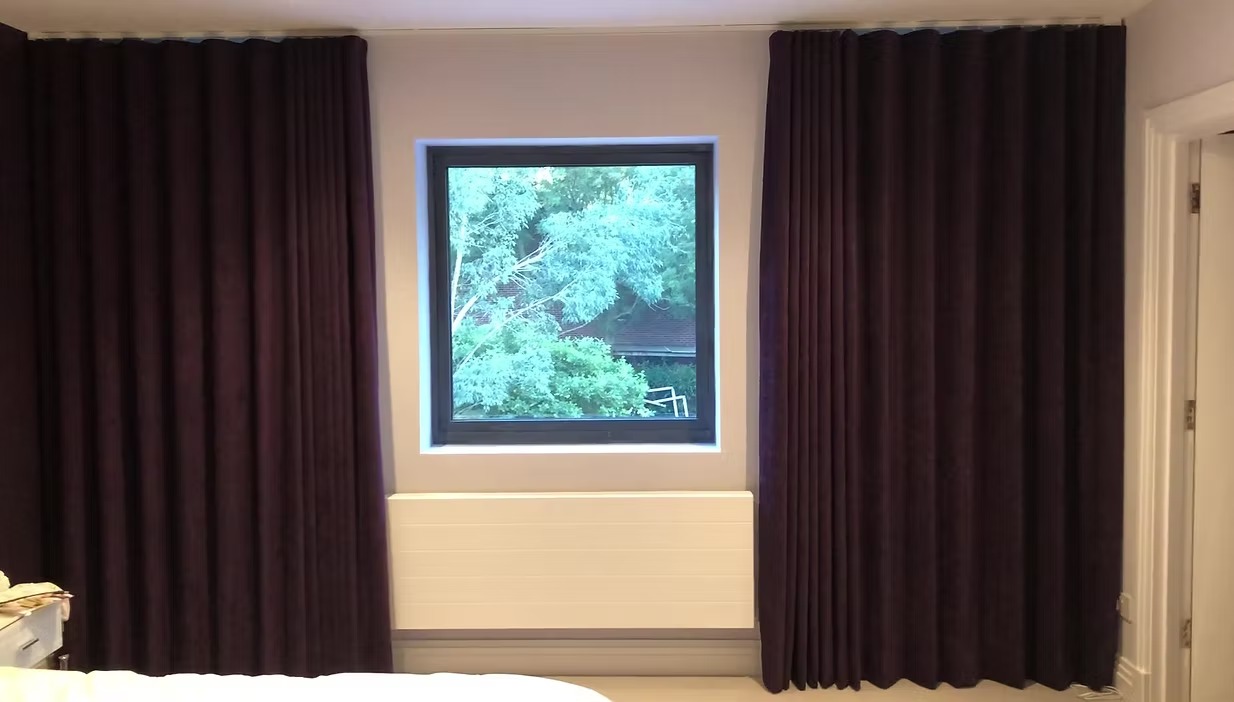
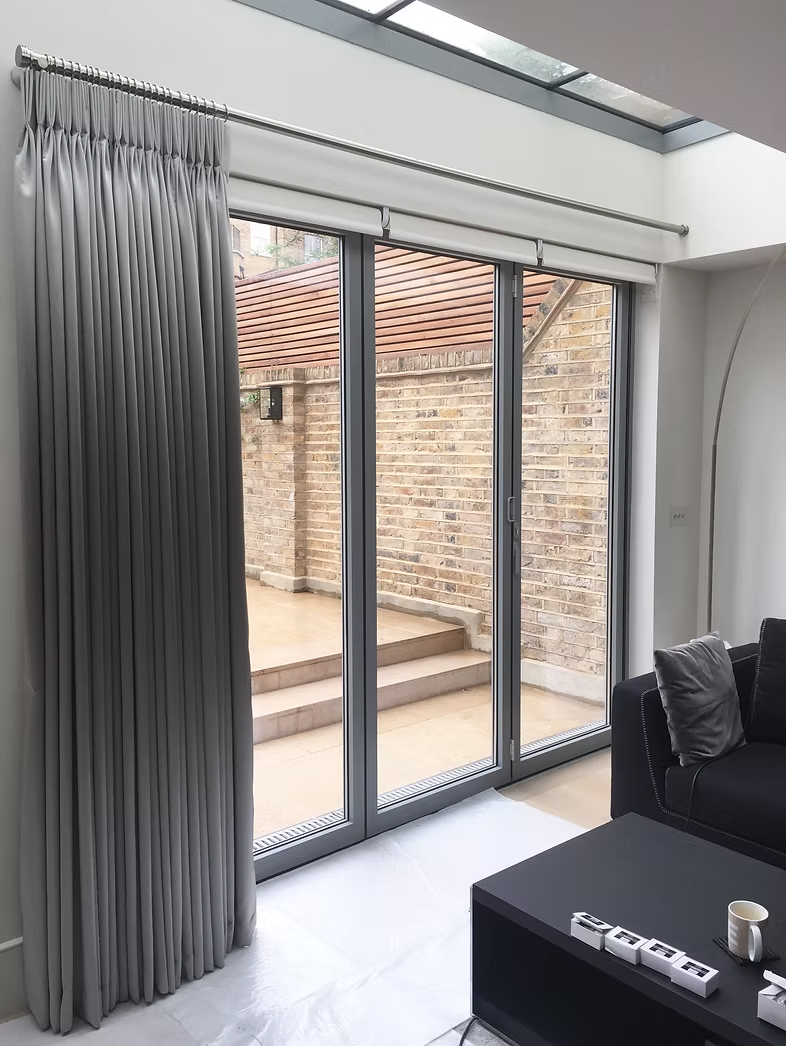
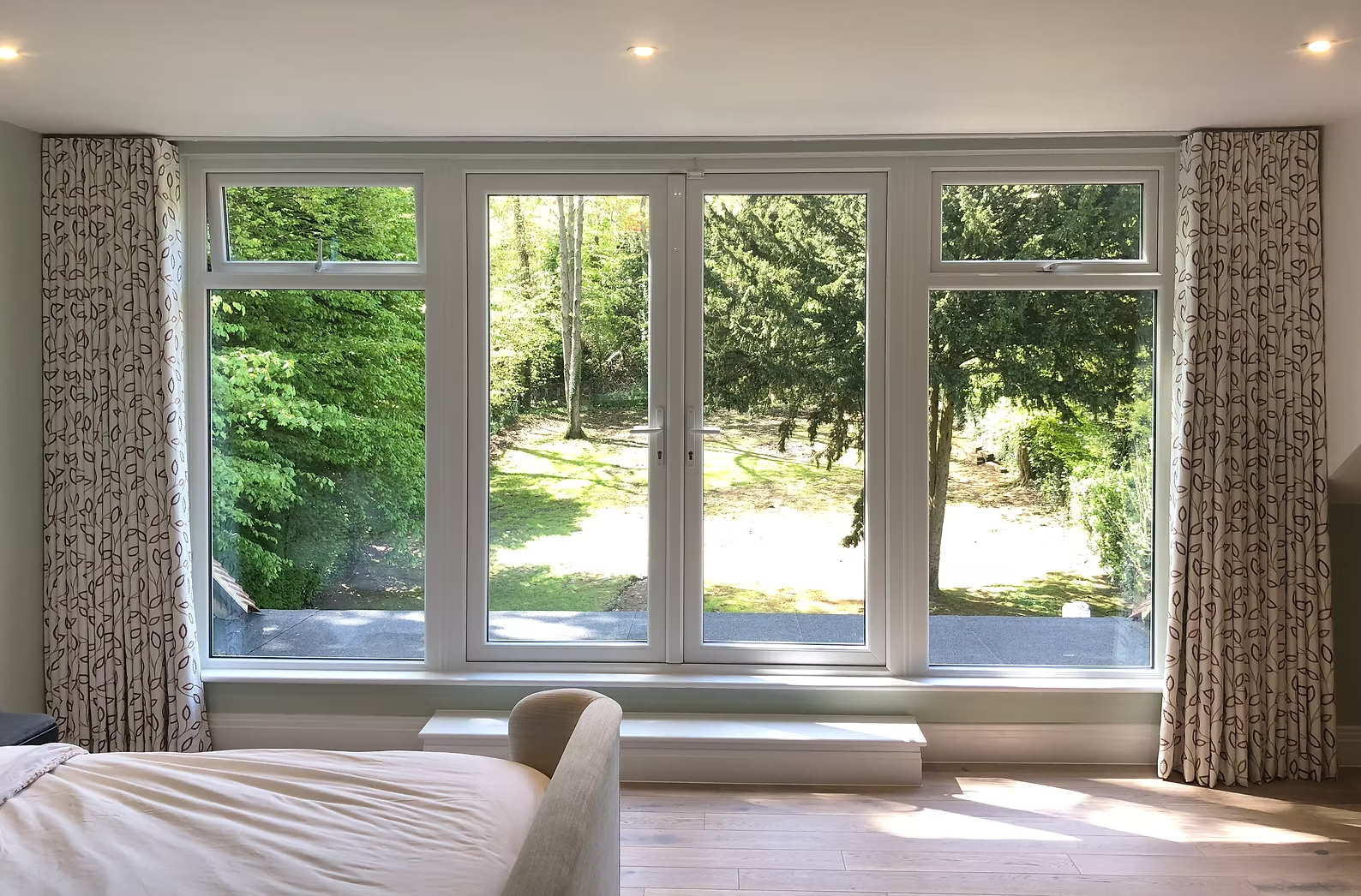
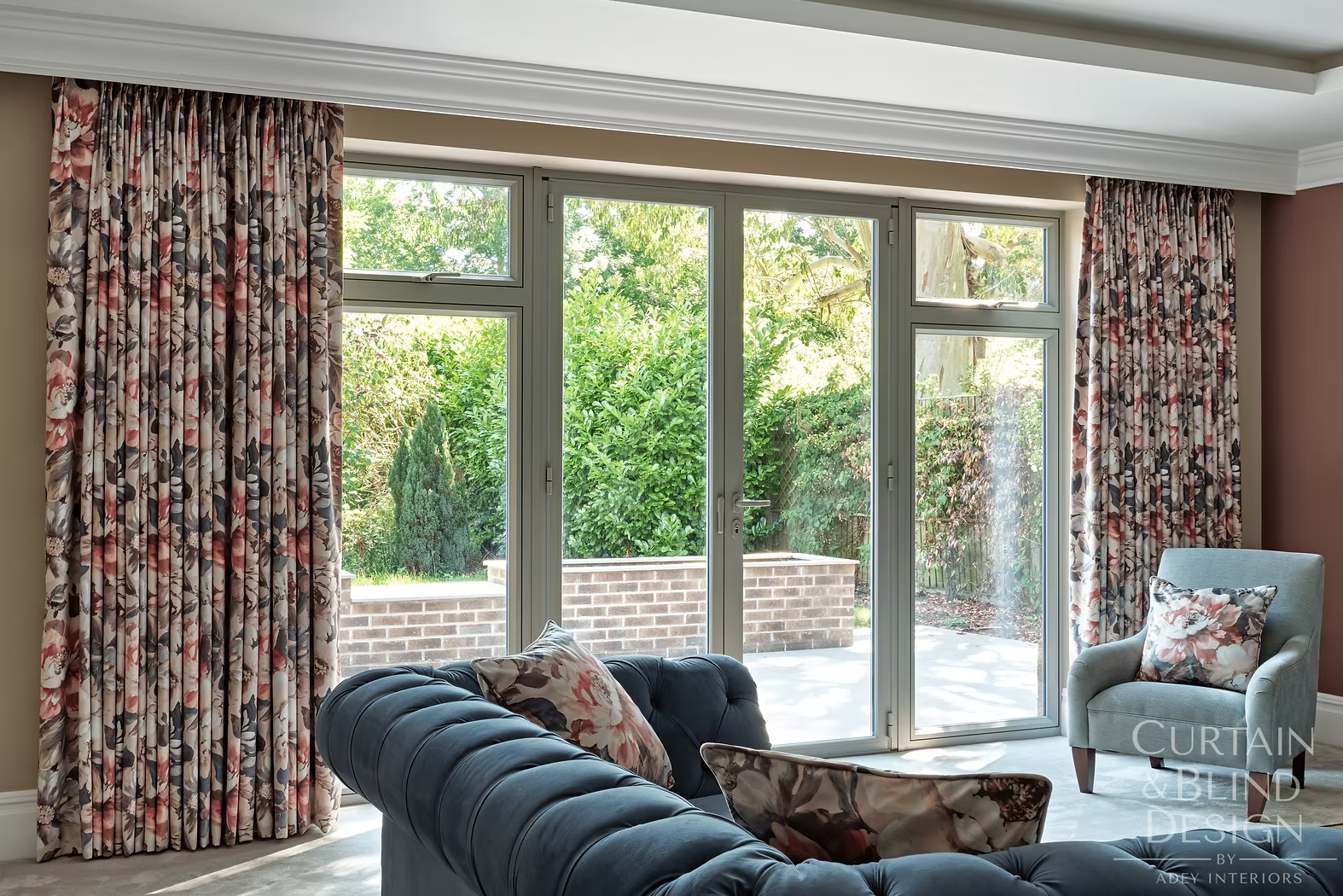
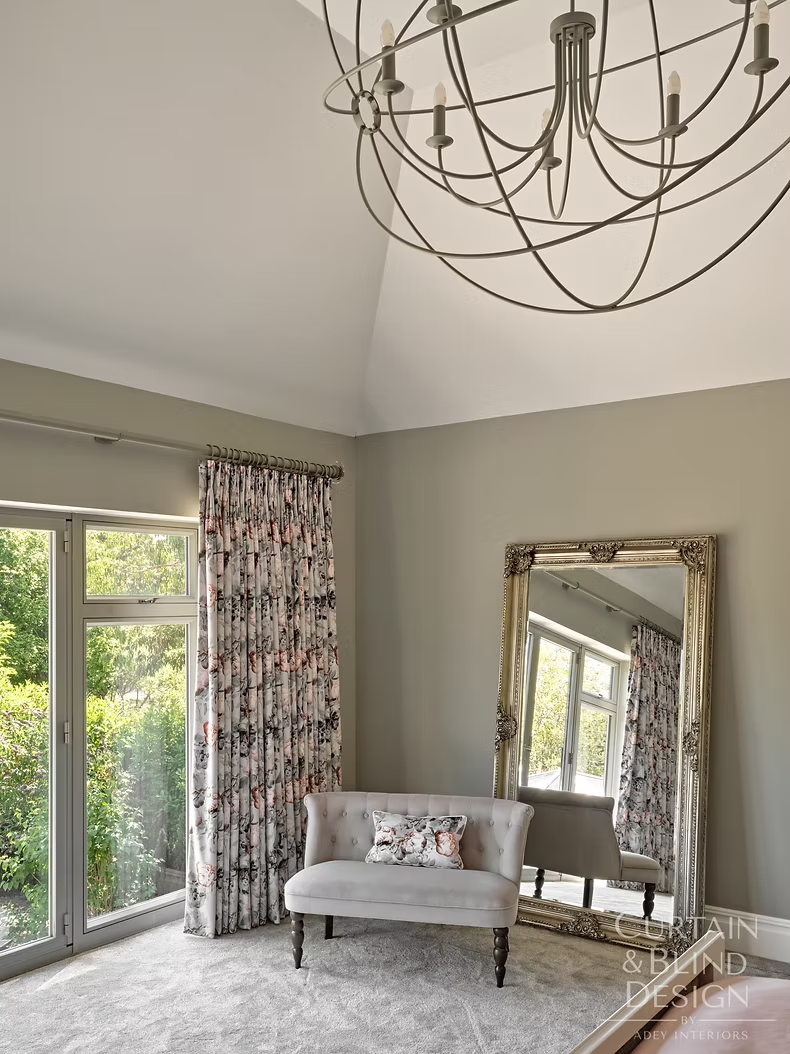
Premium Bespoke Curtains in our clients' homes
What it costs you to leave it
Fabric cut to the wrong figure
A drop measured from the glass instead of from the fitted pole, or a width taken before the track position is agreed, cannot be corrected after cutting. The fabric is spent, and a re-make is a second full fabric order rather than an adjustment.
Hardware that fails under load
Interlined curtains across a wide bay are heavy. A pole undersized for that span, or brackets fixed into plasterboard without a fixing behind it, bows, drags and eventually pulls out, taking the plaster and often the fabric with it.
A room you keep working around
Glare you close a blind against every afternoon, a bedroom that wakes you at five in June, a draught at an old sash you feel from the sofa. These are small daily costs that stay until the window is dressed properly.
How the work runs
Step 1
Home visit and survey
We come to the room, look at the windows together, and record the openings, the ceiling and floor levels, the reveals, the radiators, the sill depths and anything the curtain has to clear.
Step 2
Fabric and specification
Samples are viewed in your own daylight against your walls and flooring. Heading, fullness, lining, interlining, trims and hardware are agreed and written down before anything is ordered.
Step 3
Measurement to the fitted position
Final measurements are taken from where the track or pole will actually sit, so the drop, the stack-back and the returns are all calculated from the real installed geometry.
Step 4
Making up
Widths are joined with the pattern matched, linings and interlinings are made in, hems are weighted, leading edges are hand-finished, and the heading is set out so the pleats fall evenly across the pair.
Step 5
Track or pole fitted first
Hardware is fitted and checked for level and load before the curtains arrive, with fixings taken into something solid rather than into plasterboard alone.
Step 6
Hanging, dressing and handover
Curtains are hung, the pleats are dressed and tied so they set into their folds, the operation is tested, and we leave with the room usable. Aftercare and cleaning advice is given for the specific fabric.
What you get from it
Correct on the first fit
Because measurements are taken from the fitted hardware position, the drop lands where it was specified - floor-breaking, sill-level or puddled - without on-site hemming to disguise a shortfall.
Light and glare under control
Lining and interlining are chosen for the room's orientation, so a south-facing sitting room can hold its light while a bedroom goes genuinely dark.
Warmer at the window
Interlining plus a full drop and proper returns reduce the cold air that falls down old glazing, which is the draught most people feel at a sash window in winter.
Longevity, not replacement
Weighted hems, joined widths and headings set out to the pair keep curtains hanging true instead of dropping at one edge after two seasons.
One accountable trade
Measuring, making, hardware and fitting sit with us. There is no gap between the maker and the fitter for a fault to disappear into.
Decisions made in daylight
Fabric seen in the room it will live in removes the most common regret in this trade, a colour that was right in a showroom and wrong at home.
Materials, methods and variations
Headings and what each one does
Triple pinch pleat holds a formal, evenly spaced fold and suits high ceilings and long drops. Double pleat reads slightly softer and uses less fabric across the heading. Goblet pleats carry a period, more decorative room, particularly with interlined fabric that can hold the shape of the goblet.
Wave and ripple-fold headings give a continuous, modern S-curve and need a compatible track rather than a pole; they suit contemporary rooms, wide spans and voiles. Pencil pleat remains the most forgiving heading on an uneven wall or an awkward stack, and eyelets suit simpler cottons and linens where the pole is meant to be seen.
Heading choice changes the fabric quantity, the stack width when open and the height at which the hardware must be fitted, so it is fixed at specification stage rather than left as a late preference.
Fabrics, linings and interlinings
Linen and linen blends drape softly and crease as part of their character. Wool and wool mixes hold weight and are forgiving on long drops. Cotton and cotton satins take print well and suit crisp, tailored schemes. Velvet gives depth and absorbs sound, which is noticeable in a room with hard floors. Silk and faux silk carry sheen but need protection from direct sun.
Cotton sateen lining is the standard for general rooms. Blackout lining is specified for bedrooms, nurseries and rooms used for screens. Thermal lining adds insulation where a window is single glazed or draughty. Dim-out sits between the two where a blackout finish would feel too flat.
Interlining is a soft layer sewn between face fabric and lining. It adds body, improves drape, insulates, and protects a delicate face fabric from sunlight. It also adds real weight, which is why hardware must be specified after the interlining decision, not before.
Window types and how they change the specification
Bay windows need a bent pole or a bendable track, and a decision about whether curtains draw across the whole bay or sit as separate pairs at each facet. Returns at the ends of a bay matter because that is where light escapes.
Tall sash windows in Kensington and Chelsea townhouses often carry a floor-length drop with a break at the floor; the risk there is a skirting or an uneven floor level that makes a straight hem read crooked, so levels are checked in several places.
French and bi-fold doors need the stack to clear the opening leaf completely, otherwise the curtain fouls the door every time it is used. Dormers and stairwell glazing usually need hinged rods, hold-backs or motorised operation. Windows over a radiator are normally specified at sill length or with a full drop and a plan for the heat, which is a discussion rather than a default.
Private homes and contract work
In private homes the priority is a single considered result: one fabric decision, one window, made once and expected to last. Detail such as hand-finished leading edges, contrast trims and matched cushions belongs here.
For developments, show homes and rental portfolios the priority shifts to repeatability and turnover: durable headings, blackout linings, easily cleaned fabrics and specifications that can be repeated identically across many units. That work is covered under contract curtains and voiles.
Local windows, and living with the finished curtains
The housing stock changes noticeably across the areas we cover, and the specification follows it. Victorian and Edwardian bays in Pinner and Northwood usually want a bent pole or track and a floor-length drop with proper returns at each end. Interwar semis in Rickmansworth and Chalfont often have wide, shallow windows with a radiator directly beneath, where sill-length curtains with a Roman blind behind is frequently the better answer than a full drop that traps the heat.
Tall sashes in Kensington, Chelsea and Belgravia carry long drops that reward interlining, both for the way the fabric hangs and for the cold that falls down old glass in winter. Mansion flats bring cornices and limited height above the window, which pushes the hardware decision towards a ceiling-fixed track. Garden-facing bays in Hampstead and Primrose Hill are usually the sunniest windows in the house, so light-fastness and lining are specified more carefully there than anywhere else.
Once fitted, curtains need a short settling period. Newly hung pleats are dressed and tied so the folds set, and left tied for a few days they hold that shape for years. After that, the maintenance is straightforward: vacuum the heading and hem occasionally with a soft brush attachment, keep the leading edge out of direct handling where the fabric is pale, and use specialist dry cleaning rather than washing on anything lined or interlined. We give the fabric-specific instructions at handover so nothing is guessed later.
Questions we are asked
How much do bespoke curtains cost in Pinner?
Price is driven by fabric, drop, fullness, lining or interlining and hardware, so it is quoted per window rather than as a single figure. Published price ranges: Not Provided. We measure, agree the specification and then give you a written figure before anything is ordered.
How long do made-to-measure curtains take?
Lead time depends on fabric availability and the size of the order. Stated turnaround times: Not Provided. We confirm a date at the point the fabric and specification are signed off, and we fit the track or pole before the curtains arrive so the hanging visit is short.
Do you supply and fit the track or pole as well?
Yes. Poles, tracks, brackets, finials and bends are specified to the width of the opening and the finished weight of the curtain, then fitted by us. See our curtain poles supply and fitting service for detail.
Can you make curtains in fabric I have already bought?
Yes. Bring the fabric or the details and we will advise on whether the width, repeat and weight suit the window, and on the lining and heading that will make the most of it.
Do I have to go to a showroom to choose fabric?
No. We bring samples to your home so colour and texture are judged in your own light, against your walls and flooring, and we take the measurements at the same visit.
How long should bespoke curtains last?
That depends on fabric, sunlight and use rather than on a fixed figure, so we will not quote a lifespan we cannot stand behind. What we can say is that weighted hems, joined widths and correctly loaded hardware are what stop curtains dropping or sagging early.
Is there a guarantee on the making or the fitting?
Guarantee terms: Not Provided. Tell us what you need to know and we will confirm it in writing with your quotation.
Do you cover central London as well as Pinner?
Yes. We are based on Marsh Road in Pinner and we cover Northwood, Rickmansworth and Chalfont locally, along with Kensington, Chelsea, Belgravia, Hampstead and Primrose Hill.
Can you handle an urgent or short-notice window?
Emergency or same-week availability: Not Provided. Call 07961 112309 with the date you are working to and we will tell you honestly whether it can be met.
Can curtains be cleaned once they are made?
Interlined curtains are normally specialist dry-cleaned rather than washed, because washing shrinks the layers at different rates and distorts the drop. We give fabric-specific care advice at handover.
Where this work takes us
Next Step
Get your windows measured and your fabric seen in your own light
Tell us which rooms you have in mind. We arrange a visit, bring fabrics to view against your walls, take the measurements while we are there, and follow up with a written specification and price.
Start with a measure and fabric visit at your home. No showroom trip, no obligation to order on the day.