
Contract Curtains & Voiles
Contract Curtains and Voiles
for Developments, Lettings
and Hospitality Interiors
One specification repeated accurately across every unit, with headings, linings and fabrics chosen for turnover and cleaning rather than for a single photograph, so unit forty looks like the show home.
Send the unit schedule or window sizes. We will come back with a repeatable specification per window type.
Who You Are Dealing With
- Experience
- Transforming properties for over 15 years
- Consultation
- Free, in your own home
- Workroom
- Marsh Road, Pinner
- Measured & fitted
- Managed by us end to end
- Fabric viewing
- In your own room and light
- Registered company
- Adey Interiors Ltd · 11091485
- Guarantee & insurance
- Not Provided
What this service is, and who it is for
What contract work means here
Contract work is volume window dressing to a repeatable standard: apartments, show homes, rental portfolios and hospitality interiors, made to consistent specifications across multiple units.
Instead of designing each window individually, we design a small number of window types, say four across a development, and specify each one fully: fabric, heading, fullness, lining, hardware and fitting position. Every subsequent unit is then made and fitted to that written type.
Voiles, blackout linings and durable headings are specified for turnover and cleaning, not just appearance, so the specification survives tenants, cleaners and repeated handovers.
Who it is for
Developers and contractors fitting out apartment schemes and new-build houses; letting agents and landlords with portfolios that need consistency between units; interior designers needing a maker who can hold a specification across a whole floor.
Also show home and marketing suite fit-outs, where the window dressing has to photograph well on a deadline, and small hospitality interiors where curtains and voiles need to survive commercial use.
We are experienced in working with architects and builders on large-scale projects, sourcing and developing bespoke products for challenging commercial situations in partnership with quality manufacturers.
We work from Marsh Road in Pinner and cover Northwood, Rickmansworth and Chalfont locally along with Kensington, Chelsea, Belgravia, Hampstead and Primrose Hill.
When it is needed
Early, at the point window sizes are known from drawings rather than after handover, so hardware fixings and any wired blind supplies can be coordinated with the building programme.
Also at re-let or refurbishment, when a portfolio has drifted: different fabrics in different flats, some blackout and some not, and no record of what was fitted where.
Why volume work needs a different approach
In a single home the risk is one wrong decision. In a development the risk is one wrong decision multiplied by forty, plus a fabric that is discontinued before the last phase is fitted.
So the specification carries different priorities: fabric continuity and availability across the programme, headings that survive daily use by people who did not choose them, linings that meet the light and privacy requirement in every orientation, and hardware fixings that hold in the actual wall construction used on site.
The other difference is documentation. A written window-type schedule means the same result can be produced twelve months later by anybody, in the right unit, without relying on memory.
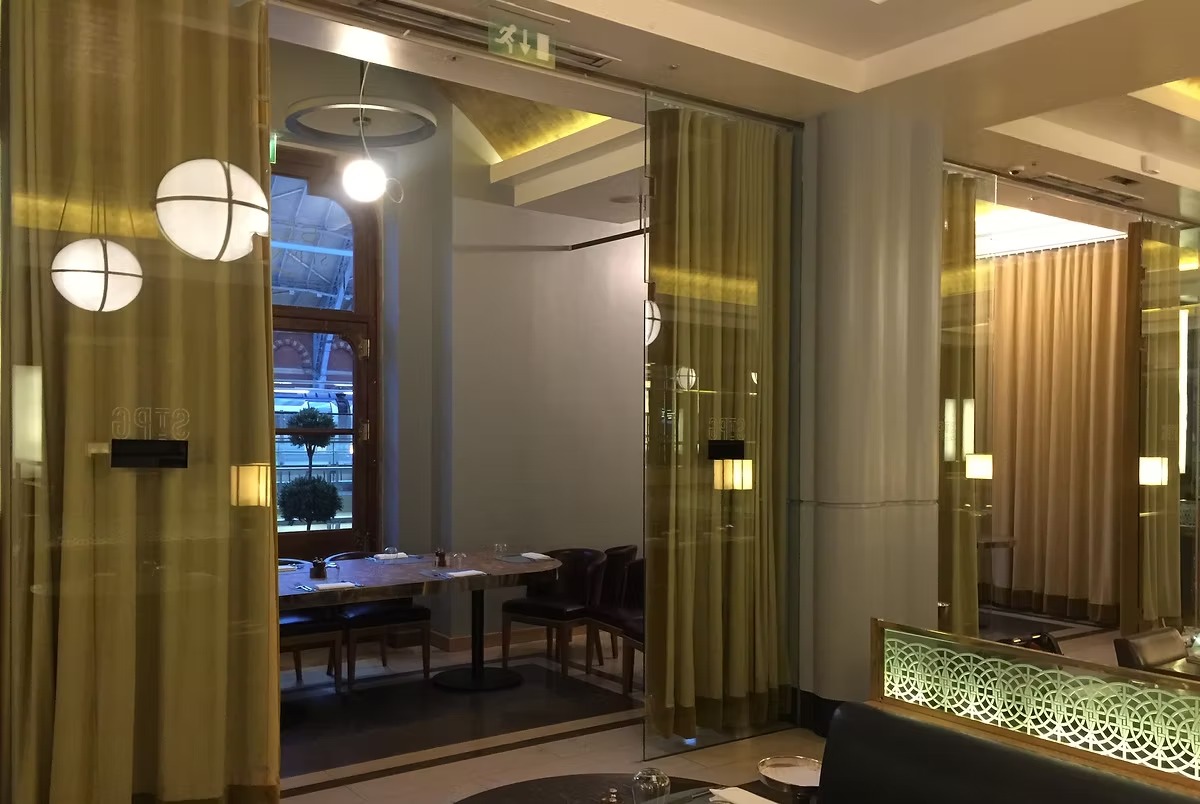
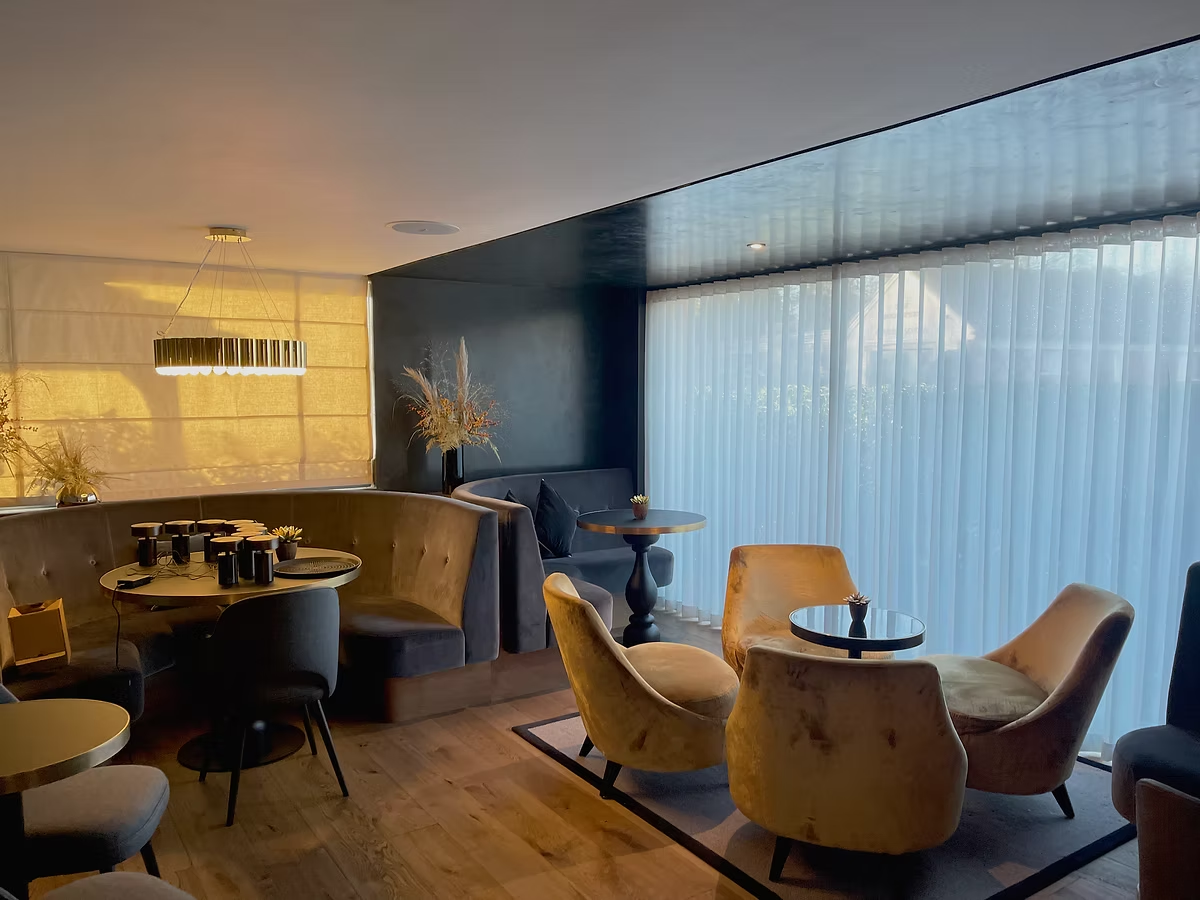
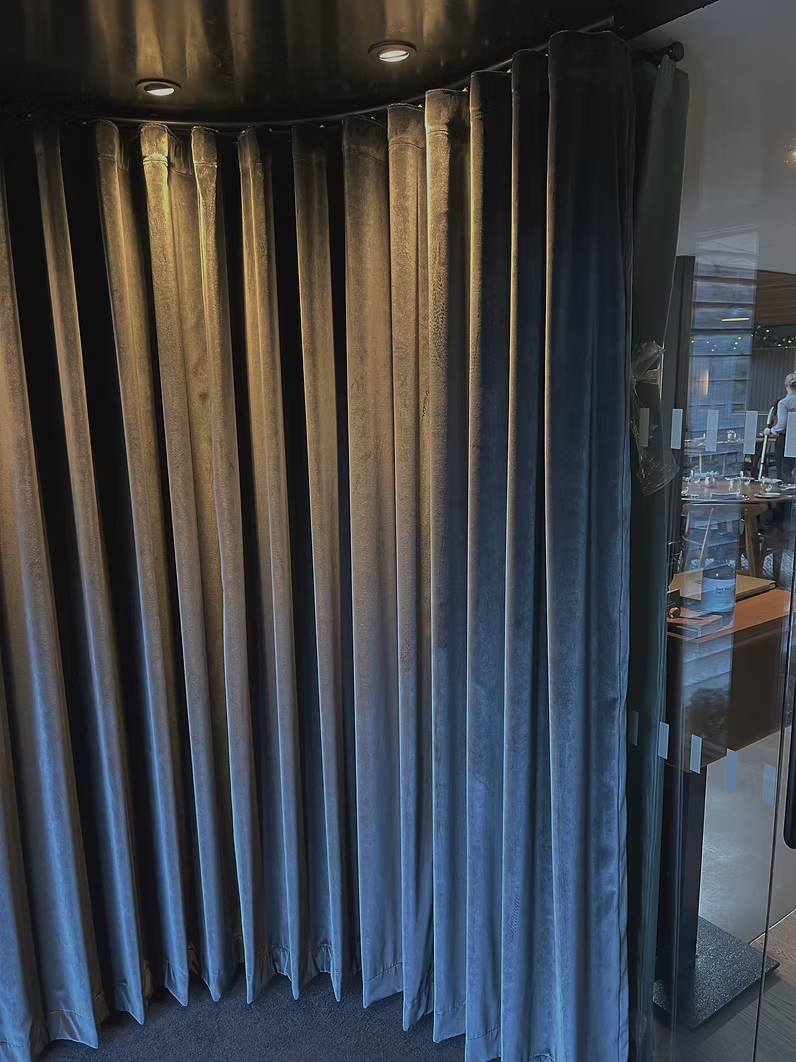
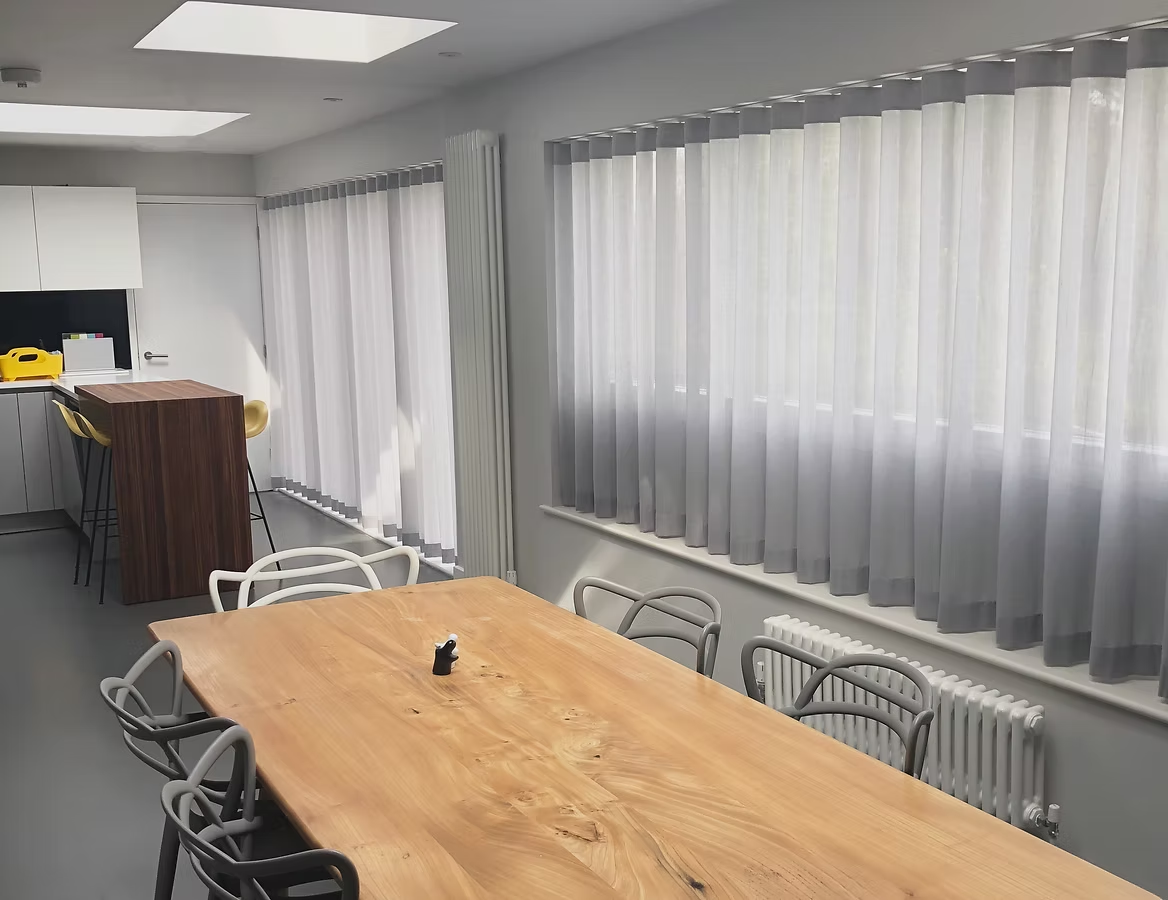
Contract Curtains & Voiles in our clients' homes
What it costs you to leave it
One error, forty times
A heading or lining that is wrong for the use does not stay a single problem in contract work. It becomes a schedule-wide remedial, usually discovered during handovers when there is no time left.
Fabric discontinued mid-programme
A fabric chosen without checking availability across the phasing leaves later units visibly different from the show home, and the show home is what the buyer or tenant was sold.
Handover delays at the last trade
Window dressing is often the final item before inspection. Fixings that cannot be made good, or blinds waiting on an electrical supply that was never coordinated, hold up completion.
How the work runs
Step 1
Schedule review and site survey
We work from your unit schedule and drawings, then verify on site: actual window sizes, wall construction, reveal depths, and how many genuinely distinct window types exist.
Step 2
Window-type specification
Each type is specified in writing - fabric, heading, fullness, lining, hardware, fitting position and finished drop - with performance requirements and availability checked across the programme.
Step 3
Sample approval
Fabrics and, where required, a sample make-up are approved before volume production, so what is signed off is what every unit receives.
Step 4
Batch manufacture
Units are made in batches against the approved types, with fabric reserved for the programme and pattern, heading and hem details held consistent across batches.
Step 5
Phased installation
Hardware is fitted ahead of the fabric, installation is sequenced with your programme and access arrangements, and each unit is checked against its type before sign-off.
Step 6
Verification and record
Every unit is inspected for level, drop and operation, and you keep the written type schedule so re-lets and later phases can be matched exactly.
What you get from it
Consistency across every unit
A written window-type schedule means unit forty matches the show home, including on a later phase months afterwards.
Specified for turnover
Headings, linings and fabrics are chosen for repeated cleaning and tenant use, so re-lets do not need new curtains every cycle.
Programme risk reduced
Fabric availability, wall fixings and any blind power supplies are settled early rather than becoming a snag list item at handover.
Lower whole-life cost
Durable specifications replaced less often cost less across a portfolio than cheap curtains replaced at every tenancy.
One point of responsibility
Survey, specification, manufacture and installation sit with us, so there is no split between a supplier and a fitter when something needs resolving.
A record you can reorder from
Because each type is documented, matching a single damaged unit later is a reorder against a specification rather than a guessing exercise.
Materials, methods and variations
Voiles and sheers in contract use
Voiles do a lot of work in apartment schemes: daytime privacy at ground and first floor, softened light on a bright elevation, and a dressed window that still lets a room photograph as light and open.
Wide-width voiles avoid vertical seams across large glazing, which matters visually on full-height windows. Weighted hems keep a voile hanging straight rather than lifting at an opened door, and flame-retardant voiles are specified where the setting requires them.
Voiles are commonly paired with a blackout curtain or blind on a separate track, giving the two functions - privacy by day, darkness by night - without asking one fabric to do both.
Fabrics, linings and durability
Contract fabrics are chosen for abrasion resistance, colour fastness to light and cleanability. A fabric that fades unevenly on a south elevation makes a whole floor look mismatched within two years.
Blackout lining is standard in bedrooms for lettings and hospitality; dim-out is often specified in living spaces. Thermal linings are used where glazing performance is poor and heating costs are the landlord's concern.
Headings for contract use favour robustness: pencil pleat and wave headings on tracks are typically preferred over decorative goblet pleats, since they survive being pulled by the fabric rather than by a hand at the leading edge.
Hardware, fixings and installation logistics
Tracks are usually specified over poles in volume work: they are quieter, take corded or motorised operation, can be ceiling-fixed where a wall fixing is not available, and are less likely to be damaged in a move-in.
Fixing method is verified against actual construction - masonry, metal stud, timber stud, or plasterboard with or without noggins - because a fixing that works in one block type fails in another, and it is not a detail that can be assumed from drawings.
Installation is sequenced against your programme: hardware ahead of decoration touch-ups where possible, fabric last to avoid damage, and access, parking and lift arrangements confirmed in advance so a floor is completed in one visit rather than three.
Where contract differs from private work
Private clients buy a considered, individual result and hand-finished detail. Contract clients buy repeatability, durability and programme certainty. Both are made properly; the specification priorities are simply different.
Where a scheme includes a show home, we usually specify it slightly above the standard unit, richer fabric or interlining, while keeping the same colour language, so the marketing suite sells the scheme without misrepresenting what a buyer receives.
Local project types, and the documentation you keep
The contract work in our area falls into a few recognisable shapes. Apartment schemes and conversions around Rickmansworth, Pinner and Northwood usually need two or three window types repeated across many units, with blackout in bedrooms, dim-out or voiles in living spaces and tracks specified for durability over appearance. Larger houses and new-build plots in Chalfont bring more window types per unit but fewer units.
Central London work in Kensington, Chelsea, Belgravia, Hampstead and Primrose Hill is more often high-specification refurbishment, prime lettings and small hospitality interiors, where the fabric standard is higher, access is tighter and installation has to be scheduled around building management, lifts and parking restrictions. Those logistics are confirmed in writing before the first delivery, because a wasted installation day on a restricted site is expensive for everyone.
What you keep at the end is as important as what is fitted. Each project is handed over with a window-type schedule recording fabric and reference, heading, fullness, lining, hardware, fitting position and finished drop per type, plus which unit received which type. That record is what makes a single damaged replacement a straightforward reorder, lets a later phase match the show home exactly, and gives your maintenance team cleaning guidance per fabric rather than a guess.
Questions we are asked
How is contract work priced?
Pricing is per window type and quantity, driven by fabric, drop, lining and hardware. Published rates and volume discounts: Not Provided. Send the schedule and we will quote per type in writing.
What lead times can you hold for a development?
Lead times depend on fabric availability, batch sizes and your programme. Stated turnaround times and capacity: Not Provided. Tell us your handover dates and we will be straight about what can be met.
Can you match a specification already fitted in earlier phases?
Yes, where the fabric is still available. Send whatever record or a sample exists and we will confirm the match or propose the closest current equivalent before you commit.
Do you supply flame-retardant fabrics for commercial settings?
Where a setting requires flame-retardant or contract-rated fabrics, we specify to that requirement. Tell us the standard your project must meet and it will be written into the specification.
Can you fit blackout throughout a lettings portfolio?
Yes. Blackout linings for bedrooms and dim-out for living spaces is the usual specification, with fitting positions chosen to reduce light gaps at the edges.
Do you handle the hardware and fixings as well?
Yes. Tracks, poles, brackets and cording are specified and fitted by us, with the fixing method verified against the actual wall construction on site.
How long will contract curtains last in a rental?
That depends on fabric rating, orientation and turnover rather than a fixed figure, so we will not publish one. Choosing abrasion and light-fastness ratings for the actual use is what extends replacement cycles.
Is there a guarantee, and are you insured for site work?
Guarantee terms and insurance documentation: Not Provided. Tell us what your project requires and we will confirm it in writing before works are instructed.
Can you work to a tight handover or an urgent re-let?
Emergency and short-notice availability: Not Provided. Call 07961 112309 with your dates and we will tell you honestly what is achievable.
Which areas do you take contract work in?
Pinner, Northwood, Rickmansworth and Chalfont locally, and Kensington, Chelsea, Belgravia, Hampstead and Primrose Hill in London.
Where this work takes us
Next Step
Send the schedule and get a repeatable specification back
Give us the unit schedule or the window sizes and your handover dates. We will survey, reduce the scheme to a small number of window types, and specify each one in writing with a price.
Send the unit schedule or window sizes. We will come back with a repeatable specification per window type.